Welcome to the Second Quarter 26 ConocoPhillips Earnings Conference Call. My name is Liz, and I will be your operator for today's call. At this time, all participants are in a listen only mode.
Later, we will conduct a question-and-answer session. During the question and answer session, if you have a question, please press 1-1 on your touch tone phone. I will now turn the call over to Guy Allen Baber, Vice President, Investor Relations.
Sir, you may begin.
Thank you, Liz, and welcome everyone to our second quarter 26 earnings conference call. On the call today are several members of the ConocoPhillips leadership team, including Ryan Lance, Chairman and CEO; Andrew O'Brien, Chief Financial Officer and executive vice president of strategy and commercial; Nick Olds, executive vice president of Lower 48 and Global HSE; and Kirk L. Johnson, Executive Vice President of Global Operations and technical functions. Ryan and Andy will kick off the call this morning with opening remarks, after which the team will be available for your questions.
As a reminder, for the Q&A portion, we will be taking 1 question per caller consistent with our normal practice. A few other quick reminders. First, along with today's release, we published supplemental financial materials and a slide presentation, which you can find on the Investor Relations website.
Second, during this call, we will make forward looking statements based on current expectations. Actual results may differ due to factors noted in today's release and in our periodic SEC filings. We will make reference to some non-GAAP financial measures, Reconciliations to the nearest corresponding GAAP measure can be found in today's release and on our website.
With that, I will turn the call over to Ryan.
Ryan Lance
Chairman & CEO
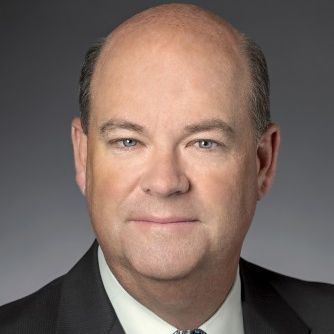
Thank you, Guy, and thank you to everyone for joining our second quarter 26 earnings Conference Call. Before I get into our quarterly results, I want to acknowledge the other announcement we made this morning. That I will be retiring as CEO effective September 1.
I have spent more than 40 years at Conoco and I have had the honor of leading the company for the past 14 years. We have some of the most talented employees in the industry, and together, we have positioned the company for long term success. With a track record of delivering superior returns on and of capital through the cycles.
And I am incredibly proud of what we have accomplished together. I am also excited that Andy will assume the role of President and CEO. You all know Andy well already. he is been with the company almost 30 years.
I do not need to list his credentials. But I do wanna take the opportunity to call out the valuable contributions he is already made. Helping to shape our company, and strategy.
His leadership experience and deep understanding of our business make him well positioned to lead the company forward. And I have full confidence in him and the leadership team he has chosen. I will assume a true transitional role of executive chairman to support a smooth leadership transition.
Andy will have full accountability for leaving the company and managing day to day operations. I wanna thank our employees, and the board for their confidence they have shown in me over the years and our shareholders. For their continued confidence in ConocoPhillips.
Let me now turn to the results for the quarter. ConocoPhillips delivered strong second quarter results Production was above the high end of our guidance range with our peer leading Permian position achieving a new record of over 900 thousand barrels of oil equivalent per day. We generated over $4 billion of free cash flow, and we increased shareholder distributions to 3 billion doubling our share repurchases from the prior quarter.
We also made meaningful progress on strategic initiatives that further strengthen our portfolio and support long term value creation. We achieved our $5 billion disposition target ahead of schedule, expanded our commercial LNG offtake portfolio, and added new growth opportunities in The Middle East at an attractive cost of supply. Simply put, ConocoPhillips is in a stronger position than ever before.
We have the highest quality asset base in the sector with the deepest and most capital efficient Lower 48 inventory and a diversified portfolio of low cost of supply legacy assets. Are executing well and driving continuous improvement. Our balance sheet is rock solid.
With leverage well below 1x and cash of more than $8 billion. We continue to lead the peer group in returning capital to shareholders. As we have done in the last decade.
Our cost reduction program is progressing ahead of plan Our LNG projects will begin contributing in 2027, and Willow continues to hit all key milestones in advance of first oil in early 29. We remain firmly on track to deliver our $7 billion free cash flow inflection by 2029. Effectively doubling last year's total free cash flow.
All of this is made possible by the best people in the business, and I am pleased to transition our leadership of the company with us being in such a strong position. So with that, let me turn the call to Andy to discuss our second quarter results and outlook in more detail.
Thank you, Ryan. And thanks to you and the board for the confidence that you have shown in me. I am excited to step into the role of president and CEO.
The company's never been in a better position, with a great portfolio and a strong foundation. Thanks to Ryan's leadership and our world class workforce. Kirk and Nick will remain important members of the executive leadership team and trusted partners as we move forward.
Continuing in their roles overseeing our operations And I am pleased to welcome Connie Haines Welsh to the team, our new Chief Financial Officer. She will be a great addition as we build on the strong foundation already in place. I am also looking forward to working with our broader organization as we continue executing with the same discipline and focus that has served us so well.
Turning now to our second quarter performance, We produced 2.248 million barrels of oil equivalent per day, That was above the high end of our guidance. Driven by strong operational performance across our global portfolio. Including record Permian production.
We generated $3.02, $4 per share in adjusted earnings, Cash flow from operations was $7.2 billion and after $3 billion of CapEx, that translated into $4.2 billion of free cash flow. We increased our second quarter shareholder distributions to $3 billion. That included doubling share repurchases to $2 billion plus $1 billion of ordinary dividends.
And we ended the quarter with $8.1 billion of cash and short term investments along with $1.2 billion of liquid long term investments. In short, this was another quarter of exceptional operational financial execution. Turning to our outlook.
Our full year guidance items are unchanged, We remain on track to deliver our plan. For distributions, we continue to target returning 45% of our CFO to shareholders this year. We averaged about 40% for the first half, meaning we expect to increase the distribution percentage over the second half of the year.
The third quarter production our guidance range is 2.290 to 2.320 million barrels of oil equivalent per day. This improvement from the second quarter is driven by a production ramp in Qatar, and continued Lower 48 growth. This more than offsets the impact of noncore asset sales of 15 thousand barrels of oil equivalent per day in July.
Now let me walk you through the 3 strategic updates. The completion of our disposition program, the additions to our commercial LNG portfolio and our new international opportunities. First, we achieved our $5 billion disposition target ahead of schedule.
With $1.7 billion of non core lower 48 asset sales in July. And we were really pleased with the value we captured for these assets. While this completes our announced disposition program, discipline portfolio management remains central to how we run ConocoPhillips.
We will continue to high grade and optimize our portfolio. That work never stops. Second, we recently signed 2 LNG offtake agreements each for 1 million tonnes per annum. 1 in Indonesia, and 1 on The US Gulf Coast.
These additions bring our total offtake to 12 million tonnes per annum and mark another important step in scaling this business. Our commercial LNG strategy builds on our global scale and decades of resource LNG experience. Allowing us to move lower value natural gas into premium priced international markets.
While maintaining full value chain control to maximize margins through the cycle. And third, we signed strategic agreements for low cost supply growth opportunities in Iraq and Syria. This builds on the improved fiscal terms we signed in Libya earlier this year.
These opportunities are part of a targeted and deliberate strategy to build on our advantage globally diversified portfolio. Each is a high quality, long life conventional asset with demonstrated production and meaningful redevelopment potential. They have attractive entry costs and highly competitive cost supply.
These fields are already producing today and we expect the production to largely fund the redevelopment. Delivering longer term free cash flow upside with little to no impact on our capital spending. To wrap up, our strategic priorities are unchanged.
They are clear, consistent, and durable. And they have served us well for the last decade. We will continue to grow our dividend at a rate competitive with the top quartile of the S&P 500.
We will protect and further strengthen our investment grade balance sheet. We will return a significant portion of our CFO to shareholders right off the top. And only after meeting all these priorities, we will evaluate disciplined growth with a focus on improving our returns on capital employed.
And we are meeting these priorities, while reinvesting to deliver a peer leading $7 billion free cash flow inflection by 2029. That inflection is well underway, As free cash flow grows, our breakeven price comes down. Our reinvestment rate comes down, and our financial strength and competitive positioning further improve.
Every measure moves meaningfully in the right direction. That concludes our prepared remarks. I will now turn it back to the operator to begin the Q&A.
Thank you. We will now begin the question-and-answer session. In the interest of time, we ask that you limit yourself to 1 question.
If you have a question, please press 1-1 on your touch tone phone. If you wish to be removed from the queue, please press 1-1 again. If you are using a speakerphone, you may need to pick up the handset first before pressing the numbers.
Once again, if you have a question, please press 1-1 on your touch tone phone. Our first question comes from Neil Singhvi Mehta from Goldman Sachs. Your line is now open.
Yes. Thank you, Ryan. What a great quarter to close on.
And Andy, congratulations and well deserved on becoming the CEO. And Ryan, you have been 1 of the most consequential leaders in the history of the energy industry. And it is hard to imagine that it was just 10 years ago you had that defining Analyst Day.
That really laid the foundation for what the sector should look like, specifically the E&P sector. So my question around is, is why now? And in terms of retiring, and how have you thought about the approach to succession planning?
And then maybe bigger picture, as you reflect on your career, any advice you wanna leave us all with as an investment in an energy community about how the sector can continuously improve from here.
Ryan Lance
Chairman & CEO
Well, thank you, Neil, lot in that. And I appreciate the kind words and really thank everybody on the call for their support personally and the confidence that you have shown in our company, and we are committed to continuing that. You know, there is probably never a good time, but you know, succession planning has really been a fundamental part of my career and what we have done with the board.
We have a very robust evergreen process. Ensure that we get the right leadership at every level in the company. And it is always been front of mind.
I have polled a number of you in the past, the very first board meeting I had with the new board when I first became CEO, 1 of the topics was succession because I swore I was not going to go through a process that I went through somewhere down the road. Know, I have been in this business 42 years. I have seen a lot, and that includes 14 years as the CEO of the company.
So you know, the moment and I love the business. And, you know, we knew this moment was always gonna come at some point in time. I am proud of what we have accomplished.
And like I said, we have been planning for quite some time. I think in terms of the timeline, I would say 3 things, Neil. First, you know, we would not do this if I did not think the company was in a strong position.
And as Andy outlined in his comments about the outlook and the and the quarter, I do not think our portfolio has ever been stronger We are executing well on all the projects and all the exploitation that we are doing. Everything's on tIraq. Cost production programs are working well.
And we are well on our way to delivering the $7 billion of free cash flow that we have committed that we are going to do in the company. So 1, you know, do not think the company's ever been in a stronger position, and I would not leave if I did not think that was the case. Second, I think you wanna know that you are turning it over to the right leader.
Who will take the company to the next level, and I am confident that Andy is that person. You know, he is been with me for 30 years. he is helped shape our execution, our strategy. And bring strong leadership, and he is played really a key role in our success that we have had to date.
And then third, I would say look, I have had a 14-year run which is phenomenal. And I have I have just been so proud of the team, the company, what we have accomplished, it is been through a lots of ups and downs in this business. And but when you think about that, you know, if I go much longer, 2, 3, 4 year, you know, I do not give the next team at least a decade to be able to put their fingerprints and take this company onward and upward.
And so it is an important time to do that because with Andy's leadership and the team that he is built, and put around him, you know, it is going to take our company to bigger and better place. So I think that is just now is the right time to be thinking about that and doing this. My advice, look.
This is such an important business in the world. We place in the middle of sustainability of energy security and national no matter where you go around the world. it is a really, really important business. And there will be ups and there will be downs. it is still you know, it is got some cycle time to the business.
So it demands sort of investors and people like yourself that take confidence in the company, take confidence in the management team, confidence in the portfolio and the execution that we are executing and got to hang with us. We are gonna be here a long time. An important business. it is an important industry.
We have all seen why energy security is becoming concerns for countries around the whole world. So I think what we are doing is really, really important to the world. it is important with this AI revolution that is coming, and we are going to benefit from that as well. But, you know, we just got to increase the interest in us we have to perform.
We need to get back to a higher percentage of the S&P 500. And to do that, you gotta compete against the S and P 500 and that is what we intend to do at ConocoPhillips. So thank you for the kind words.
Neil. I really appreciate it, and for your confidence and advice over the years.
Our next question comes from Steve Richardson from Evercore ISI. Your line is now open.
Thank you. Ryan, you have left a indelible mark on the industry and all of us who are involved. So thank you for that, and you your voice on these calls will be missed.
Thank you, Steve. Andy, appreciate the prepared remarks, but I would love for you to expand a little particularly about your vision for ConocoPhillips and where you aspire to take the organization in the next couple of years?
Yeah. Thanks, Dave. Appreciate the question.
Let me just start with sort of I think, where Ryan ended. You know, I have been very fortunate to have the opportunity to be involved in all the major strategic decisions that we have made over the past decade. So that should give you confidence that the key pillars of our strategy will remain unchanged.
Our cost of supply focus, the capital allocation framework, our commitment to competitive and improving returns on and off capital, our focus on disciplined execution that is not changing. But what I would say is do not confuse consistency of strategy with complacency. The goal of this leadership team is going to be to raise the bar on our performance and unlock even more value.
Within our long held capital allocation framework, that works so well. You know, we see tremendous potential for the company as we move into the next stage. But top of mind is that our priorities are straightforward.
We have gotta keep executing the plan. We have got to deliver our major projects and cost reduction program. That underpin our $7 billion free cash flow inflection.
So that is on track. That is going to be of hyper focused for the team and myself. We will continue high grading the portfolio.
Now that is something that we have spoken about a lot in the past, and you think how our portfolio is changed over the years. Do not look at the assets as being static. You know, we make sure all of our assets over time compete on a cost of supply basis in our portfolio.
So portfolio high grading is something you will see continue at ConocoPhillips. that is really important for us. We are going to look for additional ways to really improve our returns, you know, within our existing framework. So I think you will see a fair bit of continuity. it is not about 1 big change. it is about the cumulative impact of disciplined execution, continuous improvement, you know, our strong behaviors, and the organization that we have that drives value and we have that.
We have a world class employees their ability to innovate and drive improvement is a key part of how we are going to continue to unlock value as we go forward.
Our next question comes from Philip Youngworth from BMO. Your line is now open.
Thanks. And also congrats Ryan, on your retirement and really positioning the company exceptionally well for the long term. Also, great to see Andy's appointment to CEO next month.
For the question, just wanna touch on Qatar. And get an update with what you are seeing there across the producing assets and also the NFE and NFS projects. And you did reiterate full year production guidance despite the divestitures and Qatar not being fully back here in the third quarter.
Just wondering what the risking or assumptions are around Qatar returning?
Yeah. Good morning, Phillip. This is Kirk.
Certainly, as you are pointing out, there is been quite a bit of flux and forward looking, certainly some uncertainty as it relates to the conflict and the impacts that, that are playing out for us with Qatar. As you saw in the second quarter, Ras Laffan was largely shut in, although we did see some pretty limited volumes coming out of that business. And that was as you would expect, you know, it is a function of the ramp down that took place early in the quarter.
Naturally, there is a need to support local demand and consumption there in country. And they were able to achieve some of that certainly through our train. The planned turnaround that we had premised there in the second quarter, we were able to successfully execute you know, a bit of upside here, glass half full, taking advantage of the downtime that did exist there at Ras Laffan.
We were able to get that work done so that as that train, is expected to ramp up, certainly, over the next forward looking quarter here in 3Q, we can be in a strong position of high uptime and execution coming out of that downtime. So certainly, as you are inquiring, looking into the third quarter, our guidance does assume a ramp, across the quarter. And naturally, there is a fair bit of obvious uncertainty around the pace and the ramp as well as just overall throughput through the quarter.
And so what we have done is just capture that within the uncertainty range, that exists there in our total company and our guidance. With respect to Qatar. If I move forward then into NFE and NFS, it can oftentimes get conflated with the downtime and some of that we have had naturally around production with the Strait being closed.
But those projects were progressing well prior to the conflict, and they continued to progress really quite nicely through the conflict. Especially the onshore build out of the liquefaction trains. And so naturally, of course, we are careful to always defer to Qatar Energy on formal updates, but what we are seeing from the schedule, the productivity we are seeing coming out of that we are expecting any delays that may come on first gas or first cargo to be in the nature of months, you know, not a full year.
And so we are not expecting any delays coming out of those projects to meaningfully impact our free cash flow that we are continuing to see progress through the next couple of years. So strong confidence in what we are expecting coming out of Qatar.
Our next question comes from Doug Leggate from Wolfe Research. Your line is now open.
Thanks. Good morning, everyone. Ryan, bit of an end of an era here, but I guess my biggest takeaway is that there is hope for Guy Allen Baber yet, right?
Yeah. Well, I am gonna miss the banter. I will miss the banter, Doug.
Well, see, it is good to good luck to you all. So my question, Andy, is look. You are still getting $1.21 trillion.
We know that peak spending of Willow is still ahead. The critical path it seems to us to get to that huge free cash flow inflection is that spending comes down when Willow comes up. So my question is simply this.
Is that the plan, or is there another major reset in long term CapEx that causes that spending not to come down because if the answer is no, then the free cash flow inflation is kind of baked in yet the market does not yet seem to have confidence in it from at least from our discussion. So my question. And, again, good luck to you all.
Congratulations.
Yeah. Thanks, Doug. Let me just start with a correction.
Peak CapEx of Willow is behind us. So we so the first part of your answer is we passed the peak of Willow. And then the second part of your answer we absolutely expect our CapEx to move lower from here.
Particularly as Willow comes online early in 2029. So the short answer is yes. CapEx comes down.
But I think that is only part of the story and I think the bigger part of the story is what is happening to our reinvestment rate. And our breakeven. Both of those come down structurally Our free cash flow breakevens move from the mid forties WTI today to the low-30s by 2029, Perhaps we do not talk about this enough, but the other side of that coin is obviously a lower reinvestment rate.
So we are meaningfully moving this in the right direction. We are improving the financial strength and the flexibility of the company. that is going to enable us over time to return more capital to our shareholders. And I do want to say that we do not have expectations we are gonna go to zero growth capital maintenance levels once all of it is set up.
Now we will continue to invest in our Lower 48 portfolio and our ANI portfolio. But for modest growth. But I want to emphasize, and I cannot emphasize this strongly enough, that sort of structurally lower reinvestment rate than where we are today.
Ryan Lance
Chairman & CEO
And I would add, Doug, that we get some of this feedback as well, and you guys everybody knows us well enough. We have a high say-do ratio. We do not say things we do not intend to go do.
So when we put out the $7 billion free cash flow inflection, you can count that we are going to-- Andy, all of Andy's team is going to deliver that And then there is 2 parts to that. The CFO is gonna go up clearly as these projects come online. But the capital is coming down.
And we are gonna have choices and options even post Willow start up around what we do with the free cash flow that we generate. And it is gonna be significant. So and it starts by just making sure that we get these projects online.
You are Kirk talk about LNG and the LNG question, but it is on track. And we are seeing the cost reductions that we expect to get, and we are gonna see the capital reductions that we expect between now and when Willow gets started up.
Our next question comes from Lloyd Byrne from Jefferies. Your line is now open.
Great. Good afternoon, everyone. Hall of fame career, Ryan.
You will be missed. And Andy, congrats. Thank you.
We have a lot of confidence in you and your team. it is really strong. Thanks. I want to focus on Alaska, and I just wanted to discuss the what you can say about the exploration results the 4 well NPRA program, and then when will we get those estimates given the public data ruling?
And then maybe what it means for the implications of the plateau at Willow. Just the potential out there.
Yeah. Great. Question, Lloyd.
Good morning. So certainly, I will start with the first part of your questions. Specifically on the exploration program and what we can share.
Well, certainly, I would I would probably point you back even to the last quarter coming out of that exploration season. It was sufficiently encouraging that we were all willing to declare Ryan, myself, that we will be bringing more resources into Willow, into the existing infrastructure that we have there on the North Slope. In advance of even drilling more wells.
So really quite positive. Naturally, we are still working through what those results are. And again, I always try to remind folks that it takes more than 1 well Typically, it takes at least another export or appraisal well to confirm our development plans.
But really quite positive in how we think about what those 4 wells came out to show us. And with that then, we, of course, we steered ourselves, and our eyes are already focused on next year's program in 2027, in the winter. The winter season that confines our activity and exploration.
So we have already started field surveying, I think, local locations and ice roads. Then we have very importantly submitted our federal permit application. Which are required well in advance of us, putting ice out there to begin drilling And so when I talk about federal permits, I should I should really make a bit of a side comment here and acknowledge the Trump administration's that have been continuously supporting the development of domestic resources.
Certainly, in Alaska, as I am pointing you all towards, but even in the Lower 48, and that is showing up. it is demonstrated through ongoing permit reform efforts on the federal leases, specifically in Alaska. And, of course, we are seeing a wealth of participation in the recent sales resales there in Alaska as well as even in the Lower 48. So, we are pleased with the outcome of the of the NPRA lease sale, the acreage that we picked up is a natural bolt on to our large existing position that we have there in NPRA.
And we also see it as a really positive move with strong interest from our peer companies, you know, From our view, increased activity naturally, it is good for the state of Alaska, but it is really good for all of us. It improves the utilization of the fixed infrastructure, ours as well as others, the service industry infrastructure in such a remote area, that creates new efficiencies for ourselves and everyone else. And so, again, we see all of this as really positive news.
But if I continue to bring this back to your ending question, you know, how does this play out for us? Against Willow? So this lease sale as well as our multiyear exploration program that we have been and will continue to execute lays the groundwork for us to continue to leverage Willow and that infrastructure we are building there for decades into the future.
And you have seen this from us before. This is our playbook. We have been doing this with Kepark and with Alpine.
These new satellite pads that will eventually come from the exploration program and from these lease sales will fold into our program well into the future. Naturally, there is going to be years of plateau in Willow post first oil. And then once olege or capacity starts to show up well into the 20 thirties, we will be in a really strong position to start bringing in more oil from these satellite pads.
So gonna continue to reinforce something that you have heard from Ryan and from Andy just earlier this morning, which is our capital is going to come down. Post first oil, capital is moving back into a very ratable expectation that you have seen from historical averages from us in the past. Our reinvestment rates in Alaska have consistently been in the thirties, and you should expect that from us post first oil well into the future.
All of this continues to underpin and preserve our confidence in this free cash flow inflection. That ultimately culminates with Willow in 29. So really expect from us to be laying the groundwork for us to use this infrastructure for decades into the future.
Ryan Lance
Chairman & CEO
And I would step back, Lloyd, just at a 20 thousand-foot in support of some of what Kirk was saying about this administration and their policies that really are strengthening our energy security and dominance here in The United States. The permitting efficiencies that Kirk is talking about, the better regulatory certainty, and this regular cadence of lease sales, it is not only benefiting our company, but it is benefiting the industry as well. And they are the whole administration support is just advancing these developments that help meet the energy demand that we know is increasing.
So it is the Willow project. it is Kirk talked about the exploration sale and NPRA and the interest that brought back to Alaska. We saw the lease sales in New Mexico and North Dakota here earlier this year that you know, in a regular cadence of those even in the deep water has been helpful. And it is helped us get record production in the Permian and we are leaning in on investments on LNG side on the Gulf Coast Of Texas.
So all those things are just helping to contribute to a positive investment climate that we see from this administration. So it is been helping Alaska, and it is helping our company in lots of different areas. And I know it is helping the industry as well.
Our next question comes from Scott Michael Hanold from RBC Capital Markets. Your line is now open.
Yes, thanks. And I want to give my congrats to you as well, Ryan. Andy, and Connie on everything going on.
You know, for my question, I was wondering if I could delve into shareholder returns a little bit. Obviously, Andy, you indicated, there is going to be a big step up here in the second half of the year. And how do you envision that happening with buybacks?
Is it going be ratable? Or are you going to be opportunistic with the incremental? And you know, if you could further provide some context as you start seeing that free cash flow in inflection increase.
I mean, we are doubling our free cash flow in a few years. Do you all still are you what is the plan with that payout ratio? If you stay at the 45% payout ratio, that is a pretty large quantity.
Or do you guys think you will, you know, eventually feather back to sort of the baseline that you have out there?
Yep. Thanks, Scott. A couple of things to cover there on the short term and then the medium and longer term.
So I think as I said in my prepared remarks, you know, we averaged about 40% of our payout for the for the first half of the year. And we are continuing to basically guide to 45% for the full year. So you can do the math on how you get if you started with 40 and you end with 45, what is gonna happen in the second half of the year?
And we remain committed to the 45. Know, we do not choose to manage this quarter to quarter. All the volatility we have been seeing sort of in commodity price has been a pretty good reminder of why we do not do that.
I am not going to try to guide sort of daily, weekly, monthly what we are going to be doing. I am just going to reaffirm that the 45% of our CFO is what we are shooting for this year. And then as we look beyond this year and your question is as we start getting this free cash flow inflection and a materially lower reinvestment rate, you know, And as Ryan and I have described, you know, we are not we are not predicting a big ramp in CapEx here, then that starts to narrow down where does that cash go.
And, you know, it is do not think we are contemplating feathering it back to any note. it is more we are going to be in much flexibility as these projects come online to basically look at our commitments and you know, we think our peer leading distribution and the way we have set the company up to have the assets, the portfolio to drive that reinvestment rate allows us to stay peer leading with our distributions, and I really do not see that changing.
Our next question comes from Arun Jayaram from JPMorgan. Your line is now open.
Yeah. Good morning, gentlemen. Ryan, congratulations.
You are you are 1 of a kind. And, you know, when the history books are written on US energy, US shale, you will deservedly have a couple of really important chapters. Oh, well, thank you.
And, Andy, I also wanna express my congratulations to you are clearly the right person to lead Conoco in terms of the next stage of the company. My question is really regarding some of the recent news flow we have gotten from The Middle East. In particular, I was wondering if you could highlight some of the opportunities set in Iraq at the Kirkuk field.
Love to hear a little bit more about this transaction. And how should we think about this in terms of this transaction and your 2029 free cash flow inflection?
Well, thank you for your for your comments, and you are happy to take that question. So I am actually gonna maybe just broaden a little bit and sort of maybe talk about Iraq and Syria because there is a lot of similarities to what we have got here. So, you know, they share pretty similar characteristics.
What we are targeting here is large resource bases with low entry costs, competitive cost supplies, and then structures, very importantly, that become self funding relatively quickly. Let me just cook. Let's look at that 1 a bit more specifically.
Kind of a few sort of important points to note here. First, the structure. The contract structure is attractive.
You know, those of us who been around in a while will remember some of the old legacy technical service contracts in Iraq. This is not that. Under this agreement, we receive a share of the incremental production, the reserves, and we recover our costs.
Second, as I have said before, is that the capital here is actually pretty modest in terms of us getting into this. We currently expect sort of this to close the Iraq the Iraq transaction with Kirkuk, around year end. And we expect the acquisition capital to be in the $300 to $500 million at close.
And very importantly, that includes our share of historical costs spent to date It also includes our expectation of costs from now to the end of the year. So as we think about this longer term, we actually expect this joint venture to fund its own activity from its own cash flows. So no to little capital expenditures for ConocoPhillips is our base case here.
And that is all interesting in terms of the structure and the funding. But most importantly, this asset competes really well within our portfolio. The opportunities are comfortably within our cost supply thresholds, We are looking at cost supply here around $30 a barrel.
And again, with long term resource upside. So that is the Kirkuk opportunity. And then in Syria, you saw a couple of announcements there too.
Now the opportunities here are a bit on the smaller side. Yet they share the basic characteristics of what I just described for a Iraq. You know, they provide us a lot of long term optionality And then you know, we have also got a long history, ConocoPhillips, in Syria.
So that goes back, you know, several decades. We know we know the country well, and we know that the upside that is there. So that is kind of trying to wrap it up.
I wanna say is that the common denominator here is that we are stepping into existing producing assets that are underdeveloped and then where the redevelopment then can be funded largely from the assets' own cash flow. With a goal of really preserving our capital efficiency. So we see this as having limited to no impact on our capital program, No we think about our $7 billion free cash flow inflection we laid out in 2029, that is not impacted by this at all.
In fact, what we see this is as is upside to that in the future. So, yeah, I think these are great ads to our portfolio. And I think they fit really nicely within what we described earlier of our strategy about how we always high grade the portfolio.
And are looking for assets that meet the characteristics that we like and add them into our portfolio, But within the framework, that is the key part within the framework of how we manage our capital program. Programs.
Our next question comes from Sam Margolin with Wells Fargo. Your line is now open.
Hi. Thanks for taking the question. I am not gonna be able to beat the prior congratulatory remarks.
So I will just say thanks for being a great ambassador to the space and I am good. Helping to rise the tide. Thank you.
Not necessary, Sam. Thanks. Alright.
I mean, maybe we can take another level down into this reinvestment rate and payout ratio theme because it is as other analysts have said on the call, it is the most frequent question that comes back to us from the investment community. And Conoco has an opportunity to be a peer leader in the in regular dividend growth? Not just because of the cash flow inflection, but also because of the composition and the production mix that is changing.
Right? You will have less, unconventional as a as a percentage of your total production. And so what are your thoughts, Andy, if you can put your CEO and CFO hat on at the same time on just you know, any friction or points of conflict in taking that position as the as the leader in regular dividend growth If you worry about dividend breakeven or the overall dividend burden, or if you think that is very much in play.
Thank you.
Yeah. Great question. You know?
And I think you have framed it up in terms of the things that we obviously think about when we think about dividend growth. I would start with you know, again, continuity statement. We already have peer leading top quartile S and P 500 dividend growth. that is not changing. that is the plan.
I absolutely you know, with the team, look really closely at sort of what does it do to our 're basically increased the dividend, what is happening to our breakeven And as we described earlier, with free cash flow inflection we have with the CapEx coming down, the CFO growing up, our free cash flow breakeven is structurally reducing. So that is very constructive for the dividend. We also look very closely at our buyback program.
Know, I know you guys look at the dividend per share, you know, in terms of how much we are raising that. I look very closely at the absolute dividend burden. And having the buyback program is very helpful basically when we are increasing the dividends we have been sort of in that top quartile sort of, you know, 8%-plus type range.
When we are buying back 5% of our stock, So on average each year, that is that is basically making it much more viable we can keep doing that without having big impact on the on the burden. So we look at the dividend burden. We look at the breakeven impact.
All of those things look really positive, and we feel very confident about where way we are growing the dividend on the top quartile with the S and P 500 and fully expect us to carry on with that strategy.
Ryan Lance
Chairman & CEO
And why you did not? Sam it necessarily specifically, Sam, I mean, Andy referred to the share buyback program and maybe some of the criticism we get a little bit is we are pro cyclically buying shares. We do not we do not believe that.
When we deliver $7 billion of free cash flow, over the course of the next, you know, 2, 3 years, we believe our share price is got to improve with a doubling of that free cash flow. So we do not believe that we are pro cyclically buying our shares, which is an important part of our return to return of capital thesis, and that is only gonna get more flexibility as the top line CFO continues to grow.
Our next question comes from Betty Jiang from Barclays. Your line is now open.
Hi, good morning. I guess I will just pile on the congratulations and wholeheartedly agree with everything that is been said so far. My question is on LNG, just given the headline today to add 2 million ton per annum. 1 in Southeast Asia, in Indonesia, 1 in Gulf Coast.
Just wondering about the strategic rationale to add the Indonesia piece. And how that fits into the Gulf Coast portfolio. And then stepping out, clearly, market is pretty constructive on LNG fundamentals for the next few years.
But there is still debate around balances further out as the new supply coming to the market. So just we will have some thoughts on the through cycle earning power of this growing LNG marketing portfolio that you have built?
Morning, Betty. Let me just jump in there on the first part of your question. So, yes, we added another 2 million tonnes of offtake. 1 in Indonesia was off the Bontang North Hub field.
And then we had another 1 on the Gulf Coast. Now just stepping back in terms of our strategy a little bit, that is that is unchanged. You know, the majority of our off offtake is coming from the Gulf Coast.
And we positioned ourselves, you know, to have that low cost supply with high quality, low liquefaction fees. And, again, a lot of that or most of that is from the Gulf Coast. What we are doing here is we are supplementing it with some Pacific Basin supply Again, that is low cost of supply too, And this was always part of our strategy.
We do not expect to have a huge amount of our portfolio in the Pacific Basin. But the reason we really like to have some is having it is very beneficial for us, particularly our commercial organization, the flexibility it provides as we start thinking about how we optimize the portfolio about when we are doing substitution and diversion, you know, having some LNG in the on the Pacific Side is very helpful for just the overall optimization. So it is not a change in our strategy. it is really just tool to make sure that we can optimize and get the best margins.
And then to the second part of your question around yes, you are looking at where prices are right now. They are very constructive. Constructive.
And what I am gonna answer is I am I am gonna take a bit of a step back to sort of our views where we were prior to the war with Iran. We were a bit of an outlier in that we were always constructive on LNG demand. We and LNG pricing.
We have been saying for quite some time that we think it is the part of the energy complex that is going to grow the most. it is gonna double between here and 2050. So we have always had a view that the pricing in for LNG is going to be pretty constructive. And that is why we are building the portfolio we are.
And but just like our E and P portfolio, know, low cost supply wins in E and P. And in this world, of low liquefaction fee as the version of low cost supply. We are making sure that we are building a portfolio that is, you know, very, very competitive. We expect over the long run that we will be making pretty significant cash flow from these assets.
We know there will be some volatility over time. But we think that the price sort of the price risk here is very much asymmetric to the upside. So when we do see prices, they tend to move a lot more on the upside than the downside.
So that is something that attracts us to this. And know, just to put it in context, you know, for every $1/MMBtu that we see in margin, that on a 5 m tPA that is about $200 million of cash flow for us. So as we build this portfolio up sort of to that 10 to 15 million MTPA, we start seeing, you know, those kind of margins increase.
This is this is a very material cash flow engine for ConocoPhillips, and we think this is really important part of the energy complex for us to have a have a big stake in.
Our next question comes from Josh Silverstein from UBS. Your line is now open.
Yeah. Yeah. Thanks, everybody, and congratulations to both Andy and to Ryan as well.
Andy, maybe for you looking forward, I am curious how you are thinking about the portfolio mix. The Lower 48 has gotten up to around 65% of the production base. And with Willow and LNG, ramping up over the next few years, maybe that comes down a little bit.
But I was curious how you see the balance of maybe unconventionals or if you want to look at it that way, and maybe what is the entry into, you know, Libya, Syria kind of, you know, know, kind of delivered to kind of get you a little bit more balanced towards conventionals as well going forward? Thanks.
Yeah. Thanks. So the way we think about it is you know, somewhat agnostic basically on where the where the resource comes from.
So going to look for the best cost of supply assets that we can find. Now that said, all things being equal, it is pretty nice to be able to balance some conventional in with the with the large and growing unconventional position we have. So things like Willow, things like NFE, things like NFS, things like we are doing.
We have done you know, in Iraq and even going back a bit further. Some of the things we did where we increased our working interest in Surmont and we took more equity in APLNG These are all things that help balance that portfolio. But we look at the assets basically in terms of do they compete on a cost supply basis?
Then when they do compete on a cost supply basis, you know, we then like to have that mix You say, it really does help us with giving us an advantage on our decline rate versus others. It helps with our reinvestment rate. Versus a pure unconventional company.
But you know, we are not we are not gonna we are not gonna overreach and do something that is not competitive just because it is not unconventional. We look for the best opportunities. And pretty pleased with how, you know, we have been able to you know, balance the portfolio with the big transactions that we were able to do the unconventional to grow that position.
And then sometimes, some of the ones we do on the conventional side sort of slip under the radar a little bit because they are they are smaller, but they accumulated to put into quite big numbers. And, of course, know, when we bring Willow on, that makes another material difference. So I certainly like having that diversity in the portfolio.
Think it sort of helps us drive sort of the reinvestment rate down. I think you will see that continue. Not an expensive.
We are not going to go and do something that is does not compete on a cost of supply, and that is exactly as how I described a rack earlier is that it ticks all the boxes from the structure But first, second, and third thing that is important is it competes on a cost supply basis. And think that is how the team and I are gonna keep looking at this going forward.
Our next question comes from James West from Melius Research. Your line is now open.
Hey, good morning, everyone, and Ryan. Congrats on a great 14-year run as CEO, and I am glad you are going to get some time to work on your golf game now. And congrats to Andy and Connie as well.
My question follows along a bit with that portfolio strategy question. As we look at kind of the last couple of quarters, especially this quarter with some big moves into The Middle East, Should we expect a similar type of cadence of kind of new projects as we go quarter to quarter or year to year going forward? Or will there be some slowing, as you have molded the story around your dividend growth and a free cash flow significant ramp coming?
Well, this has certainly been a pretty busy quarter. So I do not want to set an expectation that we are going to do what we have done with Iraq and Syria and dispositions to the extent we have this quarter every quarter. You know, I am I am gonna steal mix line when it comes to lower 48 production sometimes. it is lumpy.
You know, things you know, things come sometimes they come they come in bunches. I would not read into this quarter's activity as sort of a sign that we are gonna be doing this kind of activity every quarter. Our teams, you know, we are looking at things.
The Middle East is certainly an interesting space right now with a lot of activity, and we are 1 of the few companies that really compete in that space. And we are 1 of the few companies that sort of, you know, know how to be nimble and make that work. So yes, it is an area we are looking at.
But go back to 1 of the strategy answer I gave. it is gotta fit within that framework and our strategy and our capital structure, our reinvestment rate. So everything we are doing is really to enhance that. We are not going we are not gonna break that structure.
And so as these opportunities come along, that is what they are being evaluated against. And it is the same on the disposition side. You know, as we look at the portfolio, you know, we formally you know, achieved our $5 billion target, but that does not mean that you know, discipline looking at the portfolio stops. that is something that we do every day in the team.
So I think the short answer is it was a busy quarter. Please do not expect the exact same level of activity every quarter. But our teams are always looking for the right opportunities.
For ConocoPhillips.
Our next question comes from Gabe Daoud from Truist. Line is now open.
Congrats to Ryan and Andy as well. I guess wanted to maybe ask about Lower 48 and any particular, technologies that you guys are testing around improving productivity or recovery factors, particularly in the Permian? But would also, I guess, just love generally an update around the Lower 48 and what you guys are working on.
Thank you.
You bet, Gabe. Good morning. Well, let's start with, on the technology side.
So we are testing a range of technologies. With a clear objective to not only improve recovery, but more importantly, improve capital efficiency as, Andy just mentioned. Meaning that a fewer dollars spent per barrel of oil on a EUR basis.
So we are seeing really encouraging results from real time fracture diagnostics. Where we can optimize our completions on a stage-by-stage. We are using surfactants and far field diverter applications Let me provide a little bit more detail.
On the real time fracture optimization that allows us to optimize frac designs on the fly. And we are seeing you know, we are adjusting stage volumes up to ±30% to improve reservoir contact and recovery and that is given us the potential to cut completion costs and improve cost of supply. In fact, we have seen adjustments up to 60% of the frac stages for a well versus the original, basis of the time.
Now on the far field diverters, we have seen that work extremely well in the Eagle Ford. that is where we can divert frac energy away from offset wells. And keeping the frac in the targeted wellbore, reducing runaway fractures or what we call frac hits, and that is improving recovery as well. And then finally, we have heard a lot about surfactants, out there.
We have been testing fit for purpose surfactants and see encouraging results in the Permian. Over the last 12 months, where we have seen cumulative oil volumes and lower water oil ratios. In fact, we are realizing a range of results but up to 20% uplift in oil productivity for a treated versus untreated well.
Now we will need to look at the longer term performance and how that plays out, but very encouraging early results. Now as a reminder, when you look at, these results, the biggest driver on productivity and recovery is still rock quality, and we have peer leading tier 1 inventory depth across the 4 basins that we operate in. And this is where we really see the differential Gabe, is, as a broader shale industry matures, that rock quality advantage should translate into even wider capital efficiency advantages in our peer group.
Couple other items on capital efficiencies that we have been really leaning into. This year is really, lateral lengths is a key driver for that. You know, we are increasing our average lateral length by 15%.
This year compared to 2025. And in fact, we have doubled the number of 3-mile laterals or greater this year as well. And then if you specifically look at the Permian, all of our wells that we are bringing online this year are greater than 2 miles with, you know, several 3- and 4-mile laterals being drilled.
And then as we talked about last year, that 15% improvement in D&C efficiencies, that is more feet per day, more stages per day, that continues into 2026. We are seeing that through continuous pumping, auto frac, semifrac, and remote frac. So just hats off to the team.
They are really executing well. You obviously seen it. Ryan and Andy talked about 920 thousand in the second quarter.
And that was a key driver for outperformance and seeing really strong base and develop well performance. Teams are executing well. And in fact, if you look at that outperformance over the first half of 26, Permian production was 10% year-on-year underlying basis. that is actually stronger than every major E&P. So yeah, this bottom line, executing well, and hats off to our teams.
Thank you. Thank you, ladies and gentlemen. This concludes today's conference.
Thank you for participating. You may now disconnect.







 Submit Feedback



 US
US














 IE
IE





 IN
IN











 AU
AU













































 JP
JP

























 BM
BM























































 CA
CA