Please standby. Welcome to McKesson's First Quarter Fiscal 27 Earnings Conference Call. Please be advised that today's conference is being recorded.
At this time, I would like to turn the call over to Paul Eckison, SVP of Corporate Finance and Investor Relations. Please go ahead.

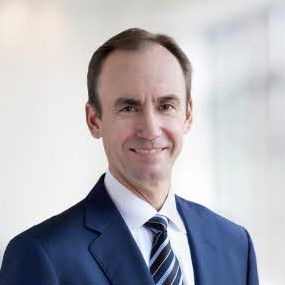
Thank you, operator. Good afternoon, and welcome, everyone, to McKesson's First Quarter Fiscal 27 Earnings Call. Todd, I am joined by Brian S. Tyler, our Chair and Chief Executive Officer along with Kenny K. Cheung, our chief financial officer.
Brian will lead off, followed by Kenny, and then we will move to a question and answer session. Today's discussion will include forward looking statements such as forecasts on McKesson's operations and future results. Please refer to the cautionary statements in today's earnings release and presentation slides available on our website at investor.mckesson.com.
And to the risk factors section of our most recent annual and periodic SEC filings. For additional information concerning risk factors that could cause our actual results, to materially differ from those in our forward looking statements. Information about non GAAP financial measures that we will discuss during this webcast, including a reconciliation of those measures to GAAP results, can be found in today's earnings release and presentation slides. and guidance assumptions.
The presentation slides also include a summary of our results for the quarter With that, let me turn it over to Brian.
Good afternoon, everyone, and thank you for joining our call. Earlier today, we reported strong fiscal first quarter results. Reflecting broad based momentum across the enterprise and the disciplined execution of our teams.
Revenues increased 8% to $105 billion and adjusted earnings per diluted share increased 20% to $9.93 both results exceeding our expectations. During the quarter, 3 of our reporting segments delivered double digit operating profit growth. Reflecting the strength of our core operating businesses.
This performance is underpinned by good stable utilization and volume growth, and is reinforced by our differentiated portfolio of solutions, our focus and the execution of our strategy. We are pleased with the strength of our first quarter performance. Which gives us the confidence to raise full year adjusted earnings per diluted share guidance to $44.20 to $45.
From the prior range of $43.80 to $44.60. Before I share an update on how we advanced our strategic priorities during the quarter, I wanted to take a moment to recognize an important leadership transition. And recognize someone in the room with me today.
Kenny K. Cheung, who is our new chief financial officer. Kenny joined us in May, and we are excited to have him as part of team McKesson. Following a thoughtful and comprehensive search, we are confident that Kenny is the right leader for McKesson.
He brings extensive experience across finance and operations, with a focus on execution and discipline that is well aligned with McKesson's operating model. He has led finance organizations across complex scale businesses with a track record of managing through change, executing portfolio strategy, and allocating capital to create long term value. These experiences are especially relevant as we continue to grow our diversified health care services offering and execute against our strategic portfolio initiatives.
Just as important or maybe more important, Kenny shares our belief that strong performance begins with strong teams. He stepping into a high performing finance organization, and I am confident he will build on that strength while helping guide McKesson through the next phase of growth. You will hear more from Kenny today about his approach to the CFO role and his confidence in the business.
Now let me turn to the quarter and highlight several key strategic initiatives that reflect our continued progress against priorities that are shaping the future of McKesson. And I will start with our people and culture, which is foundational to everything we do. We are committed to developing strong talent and building capabilities that our teams need to continue leading in an increasingly dynamic environment.
An example of that commitment is how we are empowering our teams to lead in an AI enabled environment. During the quarter, we hosted a full day enterprise AI training at our headquarters bringing teams together for educational and real, hands-on learning experience focused on the practical applications of AI. I had the opportunity to participate in person, and it was great to see the enthusiasm and the energy across team McKesson.
I continue to be impressed by the work our teams are advancing to leverage our ongoing investments in tech and AI, which are driving measurable business outcomes, strengthening how we operate, how we innovate, and how we create long term value. Now let me turn to our strategic growth pillars beginning with the oncology and multi specialty platform. The continued growth of specialty therapies represents a significant opportunity, and McKesson is extremely well positioned to capitalize on that growth.
Our strategy on oncology and multispecialty is built on the foundation of our scaled distribution services, including our GPO services, specialty pharmacy, and advanced clinical therapies capabilities, to help providers access the medicines their patients need. Today, we serve more than 14 thousand providers across a broad range of community based specialties. Through Unity and OnMark, we help providers achieve meaningful savings on drug purchases, improving the health of their practices.
Biologics supports commercialization and access for more than 200 cancer and other rare disease therapies. And through Inspira-Gene, we are expanding our advanced therapy capabilities by forming new manufacturer partnerships and bringing complex cell and gene treatments to more patients. Together, this demonstrates the breadth of our specialty distribution capabilities as we continue to enable high quality, community based care.
While our specialty distribution capabilities extend across many therapeutic areas, we are, of course, particularly focused on building a differentiated platform for oncology, and for retina and ophthalmology. These areas have strong innovation pipelines and meaningful opportunities for McKesson to offer additional services. During the quarter, we saw continued growth in our practice management business.
The U. S. Oncology network grew to approximately 3.4 thousand providers and treats more than 2 million patients annually. it is a leading force in expanding access to care and accelerating innovation in community based oncology care. Prism Vision brings together over 200 providers in 97 locations helping expand access to high quality retina and ophthalmology care again in the community setting. As we expand relationships with these community based providers, we create additional opportunities to build off distribution and GPO services.
This allows us to expand patient participation in clinical trials, generating more data and more insights. Our clinical trial services joint venture, SCRI, continues to bring innovative therapies to patients faster, and closer to where they live. SCRI participated in research that contributed to 43 of the 52 adult oncology drugs approved by the FDA in 2025.
Recently, SCRI announced a strategic oncology research collaboration with Pfizer. Help accelerate clinical trials. Through this collaboration, SCRI and Pfizer will leverage a next generation clinical trial delivery model designed to streamline trial operations, enhance site efficiency, and reduce administrative burden for investigators and care teams alike.
Let's move on to our biopharma services platform. We continue to enable connectivity across providers, biopharma, and payers. We are advancing programs that improve access and affordability, while allowing patients greater ease and confidence in navigating their prescription journey.
In July, we began supporting the CMS Medicare GLP 1 bridge program, where our integrated solutions help enable the operational workflow infrastructure including eligibility determination, electronic prior authorization connectivity, and pharmacy claims transactions for Medicare beneficiaries. Once a prior authorization request is submitted to the payer, 95% of them receive a determination within 30 minutes. This reflects the power of our scaled network and the important role our technology plays in helping providers pharmacies, payers, and biopharma partners move information more efficiently so patients can get therapy faster.
In addition to the CMS program, we saw continued growth in the new program wins throughout the quarter, demonstrating broad demand across the portfolio. Growth remains diversified across both access and affordability solutions, with brands represented across many therapeutic categories. A key differentiator of our biopharma services solutions is our use of technology and automation to reduce manual process and improve productivity.
With the advances in AI, we are applying these capabilities to improve how we build and deliver technology. During the quarter, our team designed, developed tested and deployed a production ready external data connection in a 1 business day. Work that historically would have taken several weeks or even months, The impact extends beyond faster software development.
Greater speed allows us to respond more quickly to customer needs brings new capabilities to market sooner. While we are still in the early stages of AI enabled development, examples like this demonstrate the potential to scale these capabilities more broadly across the segment. Turning to North American Distribution.
In Q1, we delivered strong growth in our core distribution business. Supported by stable business fundamentals, We continue to deliver substantial value to our customers through scaled distribution capabilities exceptional service, and a diversified channel reach. 1 of the customer channels we are proud to support for many years is independent community pharmacies. In June, we hosted our annual IdeaShare Conference, bringing together independent pharmacy leaders from across the country for education, for collaboration, and practical solutions focused on helping them navigate a changing health care environment.
This year's event emphasized innovation, including the use of AI enabled tools as well as advocacy efforts that support the long term vitality of community pharmacy. These are the types of capabilities and connections that reinforce the value of our distribution platform and help our customers continue to serve the patients, in their local communities. We also broke ground on a new regional distribution center in Moore, Oklahoma, an important investment to strengthen the resiliency and capacity of our pharmaceutical distribution network.
The new facility will increase throughput by 75% compared to the prior facility. Supported by advanced automation, digitally enabled logistics, and expanded cold chain capabilities. This investment strengthens the foundation of our supply chain and positions us to serve our customers with greater scale resilience and accuracy.
Now let me provide a brief update on our portfolio actions. During the quarter, we continued to successfully execute on the planned separation of Medical Surgical Solutions. Allowing us to continue to build momentum towards becoming a stand alone company.
We completed the previously announced strategic minority investment from Apollo Funds, bringing on an important partner with financial resources and experience in complex separations. Additionally, we completed a $2.25 billion senior secured term loan B further establishing a stand alone capital structure for the business with a clear focus on maximizing long term value for shareholders. Today, I am pleased to share that McKesson Medical Surgical business is becoming well-versed.
Well-verse delivers a future where health care providers and patients thrive. This is an important step as we establish a distinct market identity and brand that reflects the organization's purpose and vision. The MedSurg business anticipates formally operating as Well-verse starting in January 2027, as part of a phased transition.
Together, these actions advance separation readiness support the financial flexibility of Well-verse, and reinforce our focus on maximizing long term shareholder value while executing against the planned separation. Let me close my comments with this. Our first quarter performance reflects the continued momentum across the enterprise and reinforces our confidence in our strategy and the durability of our operating model.
Across the business, our teams continue to execute with discipline, advancing our strategic priorities and creating continued value for our customers, partners, and shareholders. The policy environment remains dynamic. McKesson remains highly engaged.
Focusing on the important role of community based care, access, cost, and transparency. Recently, we were pleased to become a signatory to technology pledges under the CMS Healthcare Technology Ecosystem Initiative. A good example, I think, of our continued engagement.
As a diversified health care services company, we are focused on strengthening the resilience of the pharmaceutical supply chain, improving access and affordability, enabling innovation, and helping deliver better outcomes for patients. We are confident that our strategic focus and differentiated market position will continue to position us well for sustained long term growth. With that, Kenny, I will turn it over to you.
Thank you, Brian, and good afternoon, everyone. Excited to join you from my first earnings call as part of Team McKesson. Since joining the company in May, I spent considerable time across the organization in the field learning about our business and the role we play in advancing health care.
What attracted me to McKesson is its differentiated capabilities, across the health care ecosystem. Seeing those capabilities come to life firsthand has strengthened my appreciation for our company our people, and the meaningful impact we make every day. This is an organization with impressive scale, strong execution, and a proven ability to deliver results.
The strength of the business was evident in our strong first quarter performance driven by continued momentum across the enterprise. Before I dive into our first quarter results, I want to briefly share how I approach my role as CFO. My focus is clear.
Remain closely connected to the business, Understand the drivers of performance, support disciplined execution, and maintain what I call a strong say do ratio. Do what you say you will do. Equally important, is allocating capital thoughtfully and responsibly in ways that create long term value for shareholders advancing our strategic priorities.
These priorities align with McKesson's long standing operating model and disciplined capital allocation framework. McKesson has a strong track record of investing behind growth, maintaining financial flexibility, and returning capital to shareholders. I look forward to building on that foundation as we continue to execute our strategy and create shareholder value.
Turning to the first quarter performance. We delivered a strong first quarter. With growth led by North American pharmaceutical and oncology and multispecialty and solid execution within prescription, technology solutions.
Our performance demonstrates the strength of the underlying fundamentals across the business, continued operational excellence, and the benefits of our diversified portfolio. Unless otherwise noted, my comments today will refer to our adjusted results. Revenues increased 8% to a $105.4 billion reflecting solid performance across the business.
Growth was driven by higher prescription volumes in North American pharmaceutical and continued strength in oncology and multispecialty. This was partially offset by expected market dynamics including lower branded pharmaceutical pricing following wholesale acquisition cost decreases in January 2026 and branded to generic conversions. Gross profit was $3.7 billion an increase of 13% driven by growth in North American pharmaceutical and oncology and multispecialty.
The increases reflect higher prescription volumes and strength in specialty including oncology, and the benefit from branded to generic conversions, which together supported gross profit growth across the portfolio. Operating expenses increased 10% to $2.1 billion reflecting investments and operating expenses to support growth across the business. As we continue to invest in the business, we remain disciplined in our approach to capital deployment focusing on investments that generate strong returns, enhance our ability to serve customers and drive sustainable growth. and drive-- We continue to drive operating leverage in the quarter through strong gross profit growth and effective expense management.
During the quarter, operating expenses as a percentage of gross profit improved by approximately 150-basis-points year over year, continuing the positive leverage trends we have demonstrated. Operating profit was $1.7 billion. Oncology and multispecialty an increase of 16% driven by growth in North American pharmaceutical, oncology and multispecialty, and prescription technology solutions.
These 3 segments deliver double digit operating profit growth reflecting broad based strength across our core operating businesses. Interest expense was $75 million reflecting recent financing activities supporting the medical surgical solution separation, including the $1 billion secured term loan a and $2.25 billion secured term loan b. We also completed a $1 billion revolving credit facility in support of the separation, which remain undrawn during the quarter.
Effective tax rate in the first quarter was 21.5%, compared to 21.4% in the prior year. As a reminder, our effective tax rate can vary quarter to quarter driven by timing and the amount of discrete tax items. Diluted weighted average shares, was 119.2 million, a decrease of 5%.
During the quarter, we repurchased $2.5 billion of shares including $2.25 billion through an accelerated share repurchase program at initial average price of approximately $755 per share. Adjusted earnings per share increased 20% to $9.93 reflecting strong operational performance led by North American Pharmaceutical, and the benefit of a lower share count as a result of share repurchase activity. Now let me turn to our segment results.
Starting with North American Pharmaceuticals. Revenues were $86.8 billion an increase of 5%, driven by broad based growth from higher prescription volumes, including an increase in specialty products. This was partially offset by lower branded pharmaceutical pricing following WACC decreases in January 2026 and branded to generic conversions.
While branded pricing declines impacted revenue, they did not have a meaningful impact on operating profit. As a reminder, revenues from Branded Pharmaceuticals reflect the WACC of those products and will be impacted by changes in those prices. However, our branded pharmaceutical contracts are structured such that we are compensated with a fair value of the service we deliver.
We continue to play a critical role in the pharmaceutical supply chain with strong value proposition for our manufacturer partners. Leveraging our extensive capabilities, we deliver value beyond distribution, including inventory management, central fill, and other services that support customers across the pharmaceutical supply chain. Revenues from GLP 1 medications distribution were $15 billion in the quarter, an increase of approximately $3 billion or 24%.
Versus the prior year. Sequentially, GLP-1 revenues increased 13%. Segment operating profit increased 19% to $894 million driven by growth in specialty distribution, including health systems and strategic accounts, the timing of new product launches.
Fundamentals in the business remain strong, supported by stable utilization trends, specialty growth, and the strength of our generics sourcing program. Our scale distribution capabilities include McKesson plasma and biologics, position us well to support growth in specialty distribution volumes. ClarusONE, our generic sourcing program, continues to deliver meaningful value to customers while supporting stability, of supply.
Turning to oncology and multispecialty. Revenues increased 33% to $14.2 billion driven by growth across our platform, including organic and new business growth and provider solutions. First quarter results also reflected contributions from the core ventures acquisition which was completed on June 2, 2025.
Excluding contributions from core ventures, revenues grew approximately 24%. Operating profit increased 41% to $405 million excluding contributions from core ventures operating profit grew approximately 15%, driven by higher specialty distribution volumes, organic and new growth in provider solutions, and business growth across differentiated offerings. We continue to see growth supported by solid utilization trends in the community setting and stable same store patient visit growth across the provider network.
In prescription technology solutions, revenues increased 9% to $1.6 billion driven by higher prescription volumes and third party logistics and access solutions. Operating profit increased 13% to $303 million driven by higher demand for access solutions, including prior authorization services. We saw strong demand across our technology solutions with growth driven by both GLP-1 medications and other therapeutic categories.
Our solutions continue to help manufacturers connect patients the therapy, and navigate an increasingly complex environment. The breadth of our technology and service portfolio positions us well to grow the business, while delivering value to customers and patients. Turning to medical surgical solutions.
Revenues were $2.8 billion increase of 4% year over year. Representing an improvement in revenue growth trends compared to the prior quarters. Driven by growth across alternate sites of care led by higher volumes specialty pharmaceuticals.
Operating profit decreased 20% to $195 million driven by product mix, and a 1-time administrative expense partially offset by contributions from the extended care channel. On June 1, we completed the previously announced transaction with Apollo Funds which now holds approximately 13% minority ownership interest in MedSurg. We retain majority ownership and continue to consolidate the business for financial reporting purposes.
As part of the transaction, we recorded a noncash GAAP only accounting adjustment of $293 million related to the remeasurement of the redeemable noncontrolling interest. Wrapping our review with corporate, corporate expenses were $144 million, an increase of 4%, primarily reflecting technology infrastructure investments. Let me now turn to cash and capital deployment.
We ended the quarter with $5.2 billion in cash and cash equivalents, and total liquidity of approximately $10 billion, which is well above the minimum threshold. We had negative free cash flow of $372 million, including $152 million in capital expenditures as we continue to invest in distribution technology, infrastructure, and operational capabilities across the business. Free cash flow improved meaningfully compared to the prior year, driven by efficient working capital execution.
On a trailing 12 month basis, free cash flow remains strong at approximately $6.1 billion providing flexibility to invest in the business and return capital to shareholders. We returned $2.6 billion to shareholders during the quarter through the combination of share repurchases and dividend payments. In July, our board of directors approved a 15% increase to our quarterly dividend, representing our 10th consecutive annual increase.
We remain committed to dividend growth that is commensurate with our long term earnings growth target. Turning now to our fiscal 27 outlook. First quarter performance exceeded our expectation and reinforced our confidence in the fundamentals of the business.
As a result, we are raising our fiscal 27 adjusted earnings per share outlook to $44.20 to $45. The increase in the full year outlook is supported by the strength and momentum of our business, the performance we delivered, and the confidence we have in our ability to execute throughout the year. It implies adjusted EPS growth of 13% to 15% excluding the impact of the Norway divestiture and the gain on sale of an equity investment within the US oncology network, in fiscal 26 our outlook implies adjusted EPS growth of 15% to 17%, above our long term growth target of 13 to 16%.
For fiscal 27, we anticipate revenue growth of 5% to 9% and operating profit growth of 9% to 13%. Let me give you more color on our segment outlook. In North American pharmaceutical, we anticipate revenue growth of 4% to 8% and operating profit growth at the high end of the previous range of 5.5 to 9.5%.
The updated outlook reflects strong performance and solid underlying fundamentals including stable utilization trends, and specialty growth. It also incorporates accelerated investments into the business during the second half of fiscal 27. We anticipate continued growth of GLP 1 medications throughout fiscal 27 with quarter to quarter variability.
Turning to oncology and multispecialty, we continue to anticipate revenue growth of 14.5 to 18.5% and operating profit growth of 13.5% to 17.5%. Outlook reflects the strength across the business and the value of our highly differentiated platform. Within the segment, distribution and GPO related capabilities remain the largest component of revenue contribution.
As Brian discussed, we expect growth in the platform will drive additional value across our business. As we continue to add new providers and expand existing relationships, that would drive growth across our practice management services GPO capabilities, data and analytics, and clinical research support. These offerings are designed to support providers and biopharma customers across multiple points of care, and create additional opportunities over time.
As a reminder, specific to the fiscal second quarter, will be lapping prior year gains of $51 million in the segment related to the sale of an equity investment within the US oncology network. In prescription technology solutions, we anticipate revenue to increase by 2.5% to 6.5% and operating profit to increase 11% to 15%. Performance in this business is not always linear.
It can vary quarter to quarter driven by several factors, including utilization trends, product launch timing, and the evolution of product support requirements over the life cycle of the product. We anticipate growth in our access and affordability solutions supported by demand across both GLP 1 medications and other therapeutic categories. We also expect contributions from new brands and programs being onboarded throughout the year.
The visibility we have into these opportunities together with the strength of our existing programs customer relationships supports our expectations for the segment. Moving now to MedSurg segments, we anticipate revenue growth of 1% to 6% and operating profit growth of flat to 4%. The MetSearch business has a diversified offering and broad customer reach across alternative site of care, including ambulatory and extended care, consumer health, and at home care settings.
The team remains focused on disciplined execution and operating efficiencies which strengthens our position and supports our ability to serve our customers. In corporate, we anticipate expenses of $580 to $640 million. As a reminder, we completed our exit from Norway in January.
In fiscal 26, the Norway business contributed $74 million of operating profit, including $25 million in the fiscal second quarter. Turning now to items below the line. We expect interest expense to be in the range of $380 to $420 million reflecting financing activities completed support of the Metsource separation.
We expect income attributable to noncontrolling interest of $295 to $325 million, which includes the minority ownership interest that surge. Also anticipate the full year effective tax rate of 18% to 19% a slight increase from the prior guidance range, driven by incremental tax expenses, result of higher operating profit growth. We expect the quarterly phasing of tax rate to be broadly similar to fiscal 26 with variability driven by timing of discrete tax items.
Wrapping up our outlook with cash flow and capital deployment. Our capital allocation priorities are unchanged. We remain focused on investing in our strategic priorities, maintaining financial flexibility, returning capital to shareholders, and upholding our investment grade balance sheet.
We anticipate free cash flow of approximately $4.5 to $4.9 billion. We expect repurchasing approximately $5 billion worth of shares during fiscal 2027, of which $2.5 billion was completed in the first quarter. This activity reflects the deployment of proceeds from the MedSurg financing transaction and the Apollo minority investments.
As a result, we estimate weighted average diluted shares outstanding to be in the range of 115.5 to 117.5 million. In closing, I am pleased with the strong first quarter results and confident in the path ahead. McKesson is operating from a position of strength with robust growth outlook strong balance sheet position, and long track record of execution.
I am excited to contribute as we build on that foundation and drive long term value creation. I appreciate everyone's time today. Look forward to engaging with many of you in the months ahead including at investor events in September.
With that, let's move to the QA session.
Thank you. If you would like to signal with questions, please press 1 on your touch tone telephone. If you are joining us today using a speakerphone, please make sure the mute function is turned off to allow the signal to reach our equipment.
Again, that is 1 if you would like to ask questions. And our first question will come from George Hill with Deutsche Bank.
Yes. Hey, good morning. I am sorry, good afternoon.
I appreciate you guys taking the question. I guess, Kenny, as it relates to the outperformance in the North American Pharma segment in the quarter, I guess you mentioned some of those investments. Could you talk a little bit more about kind of what is driving the organic growth and the margin expansion?
Because I think it is been a while since we have seen, you know, relatively in line revenue growth and the operating earnings in the segment. Grows so strongly. So we will look through any 1 timers that are in there.
And just any, you know, color on that segment budget.
Yep. Hey, George. it is Kenny. Yep.
Absolutely. So, you know, North America pharmaceutical had a really strong quarter for us. You know, I will go through top line and then walk through the AOB and margin side.
So on the top line, overall, 5% growth really driven by the increased prescriptions transaction volume, including higher volume specialty products. That was offset a little bit by the lower branded pharma pricing. Following the WACC increases I mentioned in the prepared remarks.
And also some branded generic conversion as well. Again, while branded pricing declines impacted revenue, there was very, very little impact on the operating profit side. On the AOP, it increased 19% for the first quarter. it is really driven by the distribution of specialty products to the health system.
And timing of new product launches. By timing, it was both on the new branded side as well as branded to generic as well. Those are the 2 factors on the timing in terms of that comment.
On the margin side, you are correct. AOP did grow faster than revenue, implying a higher margin mix profile. Generally, George, for our business, operating margin changes in the segment could be driven by a couple of things. 1 is customers.
Right? So it could be a split between national account grocery segment, community pharmacy, also product. Can also impact margin profile as well.
Branded, specialty, generic, biosimilars, and then, obviously, channel, right, between retail, specialty, and hospitals. Overall, the business is robust, and we continue to expect momentum carrying into the outer quarters as well.
Next question, please. And next will be Steven Baxter with Wells Fargo.
Hi. Thanks. Just a follow-up to the North America discussion.
Just as we look at the improvement to the guidance that you made at least versus our model, it looks like the improvement is really just primarily driven by the outperformance in the first quarter. So wondering if there is anything to call out about the drivers of quarter. Performance that either could be timing related or maybe you are just taking kind of a conservative approach to the rest of the year you think about the repeatability of that.
Thank you.
Yeah. You bet. So you are correct.
So right now, the terms of the guide, the guide up for the full year, the majority of the driver is driven by NAP business, North America pharmaceutical being on the high end of the EOP range of 9.5%. And I think the question behind that is more about the confidence behind the guide. So, you know, let me share with you my thoughts on that 1.
You know, we are pleased with the continued momentum in our business, and that is the reason why we guided 40¢ above. The last, not midpoint. And you can see broad based growth.
Right? NAP, as you mentioned, is definitely showing momentum. It was not just NAP.
It was O and M as well, and RxTS all grew double digits for the quarter. I think from my lens, the forecast and the guidance is what I what I would say is what we see today. It is intended to be a balanced view of the year, not a best case scenario, We feel really good about the momentum we are seeing in the business and the strength of execution in our Q1 results and the exit rate as well.
June was the strongest month of the quarter. As always, there are always opportunities and risk along the way, And as a management team, we are really focused on 3 things. Number 1, execute with discipline.
Number 2, mitigate potential risk where we can. And last but not least, position the business to capitalize on opportunities as they emerge. So as you can see, it is a very thoughtful process.
And when it comes down to it, that is the reason why we are very confident in our full year guide.
Next question, please. And next will be Elizabeth Anderson with Evercore ISI.
Hi, guys. Good afternoon. Thanks so much for the question.
As we think about the drivers of oncology and multispecialty, obviously, some very, very nice growth in the quarter. How do you think about could you parse that apart a little bit more for Florida Cancer sort of performing in line to your expectations, exceeding that? And anything else you could provide to sort of talk about sort of that accelerated growth through that in that segment?
Thank you.
Yeah. You bet. You bet.
So for oncology, and multispecialty, you know, we had a really strong quarter there as well. Let me unpack your question. a bit. So for the quarter, top line revenue was roughly 33% growth.
Now there are 3 key drivers of that 33% growth for oncology multispecialty. Number 1, we saw really nice growth in existing provider solutions and specialty distribution. So that is what I call penetration.
Number 2, we won new business as well, and the pipeline continues to be robust. But last but not least, to your last point, there was contribution from the acquisition side meaning core ventures. If you normalize for core ventures of the 33%, it is roughly 24%.
And then on the AOP side, we grew 41% year over year. If you normalize for Core Ventures, it was roughly 15%, which is in line with the long term target. And if you reflect specifically on Florida cancer, we have been very pleased with the work the team has done to integrate them into McKesson operations has been very, very solid.
Execution has been fantastic. And we are, on the high end of the guidance range we provided you at the time of the acquisition. So it has been very successful, both in the cultural integration, the operational execution, and the financial performance.
I would note that we began lapping that transaction starting this quarter.
Next question, please. The next will be Brian Tanquilut with Jefferies.
Hey, good afternoon and congrats on the quarter. Maybe just as I think about the comments you made on GLP, expecting that to continue to grow throughout the year. Just curious what you are seeing there in terms of market dynamics especially as it relates to employer coverage and how you are thinking about that going forward and also balancing that with the consumer side of things, direct to consumer aspect of GLPs.
Thanks.
Sure. Well, we continue to be pleased with the growth that we are seeing in GLP ones. There is a vibrant cash market for GLP ones. it is 1 of the only product categories out there that I think we could say that is that is true for.
But we have seen very strong growth in the covered segment as well. Evidenced by the performance of CoverMyMeds and the revenue that is showing up in our technology business. There has been some debate about coverage, but it really has not moved super significantly.
And you can obviously track the overall growth and performance of this category and see that the growth remains healthy and robust.
Next question, please. And next will be Lisa Gill with JPMorgan.
Hi. Thanks very much. Brian, you mentioned that, you know, you continue to monitor what is happening from a policy and I just really wanted to understand 2 things. 1, we have heard about some incremental changes around March, and I am curious if there is any impact to your North American business due to that.
And then secondly, anything else that you are watching? I know you and I have in the past have talked about Globe and the fact that, you know, that pricing goes around the physician practice and does not really have an impact. But is there anything else that we should be thinking about from a business perspective?
Sure. Let me start with 340B and I should frame the discussions and remind everybody that this is probably pretty preliminary because the current proposal remains under a comment and review period. We think it is gonna be important to let that process play out before we draw any conclusions about the final structure or timing or anything, and Lisa, you all well know we have seen many 340B proposals come and go over the last half a decade or more. 43 b is a complicated ecosystem.
And I think any reform we see there will create both opportunity and challenges for various stakeholder groups Some participants will benefit from operational clarity and transparency. Others could face impacts to their economics, cash flows, etcetera. We serve many of those stakeholders.
Hospitals, health systems, contract pharmacies, community providers, biopharma manufacturers, So we really think about this from a very holistic or multiple perspective. Our focus will be to help our customers navigate this change like we do for all policies that we have had to deal with over my 30 year career. And we will think about all the constituents we serve as we approach that.
And I think regardless of ultimate direction the reform takes, we think that our scale, our technology, expertise, compliance expertise, and our strong relationships will allow us to continue to create value. So it would be premature to speculate on the financial impact. But I feel very confident in the capabilities of McKesson in partnership with our customers that we can navigate that.
Your second question, I think, related more towards you know, what other things are we watching. there is obviously been a lot of discussion about IRA Part B. And I would just remind everyone that is not gonna go into effect. Until January 2028. And, again, there is a lot of unknowns.
We do not know what the MFP will be. We do not know if there will be supporting reimbursement changes around that. We do not know if biosimilars will come into the market, and therefore, obviate the eligibility for that program.
What we do know is that fundamentally, the community provider setting is the low cost setting with the highest and easiest access to care. We believe the government and our legislators understand that. And we would put forth evidence for that at the program you referenced, GLOBE, whereas they attempted to push prices lower in this in this demonstration project, a mechanism to achieve that is a rebate directly from the manufacturer to CMS therefore, with no impact on the provider practice itself.
We think that is a good solution. that is a working solution that supports the goal of lowering drug prices. But it also protects community based provider and therefore creates an incentive for care to happen in the community where it is low cost, I. E. Good for the government, and easy for the patient to access.
I think 1 thing just to add, you know, as when we talk about think about IRA, there is a lot of discussions around WAC pricing you know, let me share with you how I think about that topic. Just a reminder, right, on WAC pricing, you know, WAC movements impact top line because our revenue is recognized on drug selling price. Right?
However, GP and operating profit are far less sensitive on these price changes. And just so you know, more than 95% of our branded drugs are fee for service as we earn a fair value for what we deliver. I think 1 proof point that I would to kinda talk about is, you know, this past quarter, as I mentioned in my prepared remarks, we did see WAC pricing decreases.
And despite this dynamic, we were able to achieve GP growth, margin expansion, and strong operating leverage as well. So this is another proof point that as a as a company, we know how to manage through these dynamics.
Next question, please. And next will be Erin Wilson Wright with Morgan Stanley.
Great. Thanks. So within the North America distribution business, I think you spoke to some of the accelerated investments that you called out.
You so much touched on the confidence you have in the guide, but, I guess, more specifically, is there anything to call out or we should be aware of from a quarterly cadence perspective as we kind of map out the balance of the year within that segment? Thanks.
Yeah. So in terms of quarterly cadence, let me go through the enterprise, and I will, you know, give you a bit more detail. So first, you know, we from a North America standpoint, seasonality plays a factor here.
So if you look at prior years, Q4 will be the biggest quarter for us from a dollar standpoint. If you look at RxTS, from a quarterly standpoint, where I will remind you, Q4 is our annual verification season. The quarterly cadence can vary due to internal investment patterns. product launch timing, general product life cycle, which may shift to other services in termination.
On MedSurg, you know, right now, we have closed the minority interest investment from Apollo. So just make sure you model the quarterly NCI correctly in terms of that front. Again, for Norway divestiture, that was completed in January 2026.
So in terms of the, the phasing of it, this quarter, it was roughly $25 million from a year on year standpoint. And then last but not least, on US oncology and multispecialty, from a quarterly cadence standpoint, this quarter, meaning Q2, we have a $51 million gain that we are lapping last year driven by the sale of equity investment within the USON business.
Next question, please. And next will be Eric Percher with Nephron Research.
Thank you. I want to return to onco and multispecialty, and I appreciated the commentary on organic growth there is been a lot of discussion of what the growth rate is today? And I would be interested in your view of the long term do you view as the market's growth versus your growth given the assets and specialties that you are in?
And then Brian, I might come back to you on how can you extend that growth via additions of additional providers or other services.
Yeah. Look. We are very pleased with the growth that we have seen in oncology and multispecialty and even adjusting for the last quarter of FCS impact we grew 24% in this segment. that is a combination of the organic growth resident in the market same store same store visits or patient traffic that was up sequentially over our last quarter.
We continue to add to our practice by recruiting physicians and expanding geographically All of those things, Erin, support our growth algorithm. We do not think there will be opportunities for kind of the scale of adding additional FCSs, but we do continue to think that geographical expansion and recruitment to build the practices locally will be an important part of the growth algorithm. And then as we continue to introduce technologies, AI or otherwise, into the support of these positions.
It should allow us to expand our capacity to see patients, and that is a growth driver we have not really talked about a lot in the past. So very, very pleased with the performance. Feel very good about the positioning of our business.
The quality of the service we deliver, and the impact we have on patients' lives.
Yeah. The outlook reflects you know, the outlook and guide reflects the overall strength of the business and the value of our highly differentiated platform. The 15% growth I mentioned earlier that is all organic. no M&A in there, and we do expect that to continue on the forward to hit the long term targets.
The growth would come from, as I mentioned, a couple areas. Right? There will be some m and a along the way, some tuck ins along the way.
And then you will also have driving more throughput through existing provider network. And also winning new business as well. As you probably know on the USON side, for example, we have 3.4 thousand providers we also have a bigger basket of 14 thousand total, which we support the GPO distribution side as well.
So we expect broad based growth across the board.
Next question, please. And next will be Kevin Caliendo with UBS.
Hey, guys. Thanks for taking my question. Kenny, welcome aboard.
Love the energy on these calls. it is great. Question about the free cash flow. You I know the guidance has not changed, but I just wanna I kind of asking Kenny this question. it is basically down not just year over year, but for over the last couple years.
And I know with your business, it is always lumpy in this way. But now this is sort of like a 2 year trend. Earnings are growing a lot faster than free cash flow.
And I am just wondering if there is anything in there that we should think about or when we might think about the free cash flow starting to accelerate a little bit? Because just optically, it looks a little off or it looks a little odd that it is not growing along with the income.
Yeah. I understand the question. I follow you completely.
So first quarter, we had, you know, usually first quarter, free cash flow is negative because of working capital and inventory timing. With that said, though, this year was much improved. Last year, we were roughly down a billion dollars in free cash flow.
This quarter, it was roughly $370 million. So much improvement there. A lot of it is structural, which is very, very encouraging. it is still early in the year for us.
And as you pointed out, there is a lot of moving pieces on day of the close, that there is been the day the week of the close, etcetera. So right now, we are providing we are sticking with the current guide, which we provided on the last quarterly call. With that said, from my vantage point, we are seeing, you know, using technology, AI, etcetera, really structural improvements within our working capital management.
And I do believe some of that should flow through for the rest of the year. So as we progress through these projects and, you know, more to come on this 1 is my answer. More to come on this 1.
Right now, I feel very good about our forecast. And, you know, we do have opportunities along the way to beef that up throughout the year.
Last question, please. Certainly. That question will come from Michael Cherny with Leerink Partners.
Good afternoon. Thanks for taking the question. and yes, welcome, Kenny as well. I apologize to come back on it, but I just been doing some rough math.
Even if you go to the high end of your North American pharma guidance for the rest of the year, you are at about 6.8%. Now this is very squarely in line with the LRP. But as you think about the moving pieces for that segment in the back half of the year, are there anything on the comp dynamics we should think about?
And how are you thinking about the path forward, both utilization as well as additional potential launches within that market. It would be greatly appreciated. Thanks.
Yeah. Well, again, very pleased with the first quarter and the strength coming out of the gate. We think the utilization environment continues to be steady.
I would say Michael, that we probably had some favorability in the generics portion of the business that came earlier in the year than we would have expected it to. That obviously will come at the expense of later quarters. We benefited early.
But other than that, I do not think there is anything structurally that would that-- Kenny, you might wanna comment.
Yeah. Yeah. So as I mentioned earlier, there were some new product launch timings.
As I mentioned earlier, these were the both the new branded and the branded to generics, and that did pop up a little bit on the AOP growth in Q1. As I think about the rest of the year in terms of the NAP guidance. Right?
So the updated outlook reflects strong performance and solid underlying fundamentals including a continuation of stable utilization trends and specialty growth. It also incorporates accelerated investments in the business in second half of the year as well, focused on growth and also AI. So we do have that baked into our current forecast.
And the return on investment, it is accretive to our enterprise, and the return timing most likely be the beginning of 28. At McKesson, we are always thinking about ways to deliver in the spot moment, but at the same time, investing for tomorrow as well. And these are the right things to do with the company. it is been part of our algorithm. that is exactly it.
Okay. Well, thank you again everyone for joining us today. We always appreciate your questions and thank you to Cynthia for facilitating the call.
McKesson's first quarter results were strong. And they are a testament to strength of our business, fundamentals of the markets we participate in, and the differentiated solutions that we bring to those markets. I do wanna thank all McKesson employees for their dedication their unwavering commitment to our partners, to our customers, and to their patients.
As we look ahead, we are confident in our ability to consistently execute extend the business momentum, and deliver long term shareholder value. Thanks again, everyone. I hope you have a terrific evening.
Thank you for joining today's conference call. You may now disconnect and have a great day.








 Submit Feedback




 US
US




















 IE
IE





 IN
IN













 AU
AU

























































 JP
JP






























 BM
BM


































































 CA
CA