Good day, and welcome to the Blackstone Second Quarter 26 Investor Call. Today's conference is being recorded. At this time, participants are in a listen-only mode.
If you require operator assistance, please press zero. If you would like to ask a question, please signal by pressing 1. If you are using a speakerphone, please make sure your mute function is turned off to allow your signal to reach our equipment.
At this time, I would like to introduce Tucker, Head of Shareholder Relations. Please go ahead.
Thank you, Katie, and good morning, and welcome to Blackstone's second quarter conference call. Joining today are Stephen Schwarzman, Chairman and Chief Executive Officer; Jonathan Gray, President and Chief Operating Officer; and Michael S. Chae, Vice Chairman and Chief Financial Officer. Earlier this morning, we issued a press release and slide presentation, which are available on our website.
We expect to file our 10-Q report in a few weeks. I would like to remind everyone that today's call may include forward-looking statements which are uncertain and may differ from actual results materially. We do not undertake any duty to update these statements.
For a discussion of some of the factors that could affect results, please see the Risk Factors section of our 10-Ks. We will also refer to non GAAP measures, and you will find reconciliations in the press release on the shareholders' page of our website. Also note that nothing on this call constitutes an offer to sell or a solicitation of an offer to purchase an interest in any Blackstone fund.
This audiocast is copyrighted material of Blackstone and may not be duplicated without consent. On results, we reported GAAP net income for the quarter of $2.4 billion Distributable earnings were $2 billion or $1.52 per common share, and we declared a dividend of $1.29 per share, which will be paid to holders of record as of August 3rd. And with that, I will now turn the call over to Stephen.
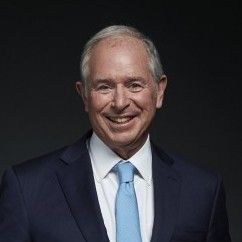
Stephen Allen Schwarzman
Chairman, CEO & Co-Founder
Good morning, and thank you for joining our call. Blackstone reported outstanding second quarter results with distributable earnings up 26% year over year to $2 billion, as Weston mentioned, approximately the same rate of earnings growth we delivered in the first quarter. Fee related earnings grew 22% year over year in the second quarter.
While net realizations rose 27% despite the geopolitical volatility. Total inflows reached nearly $70 billion in the quarter, and over $260 billion for the last 12 months. Lifting assets under management 11% year over year to a record $1.35 trillion.
The most significant driver of these strong results continues to be the large scale investments we made in artificial intelligence related areas, including data centers, energy and power, and the frontier AI companies themselves. These investments are leading to standout results in numerous strategies across the firm. And are supporting our momentum in fundraising.
Deployment, and as we start to monetize some of the substantial gains we have been building in these areas, in performance, revenues. Over the past several years, we have been regularly sharing our views on the transformative potential of AI. And how we have been positioning the firm to benefit from the paradigm shift that is underway.
Blackstone has become 1 of the largest private capital providers in the AI ecosystem. A position that gives our investors unique access to the remarkable opportunities emerging in this area and allows them to share directly in the extraordinary potential upside. Many of these opportunities, of course, cannot be replicated in the public markets.
We built the largest data center development business in the world. And demand for compute is accelerating. We became 1 of the most active private investors in power and utilities.
And energy demand is significantly rising. And we invested directly in some of the fastest growing private companies in the world, including Anthropic, OpenAI, and SpaceX. And we are now creating new companies and platforms that we believe will play a critical role in the advancement of AI including 4 in the second quarter alone.
First, we teamed with Google to build a new AI cloud provider powered by their TPU chips. Investing up to $5 billion initially. We think this business has the potential to scale quite significantly over time.
As the first Neo Cloud. For TPUs. Second, we partnered with Anthropic to form a company focused on driving enterprise adoption of their AI powered solutions.
Helping firms to realize the vast potential of this technology. Third, we joined BroadcoM&Another manager to create a financing platform in support of Broadcom's deployment of large scale AI compute for their end customers. The platform provided $35 billion initially to deliver 1 gigawatt of compute representing the largest private credit investment in history.
With much more to come. And fourth, alongside these partnerships with leading AI companies, we launched the Blackstone REIT known as BX DC. Something public market investors can access directly.
To acquire stabilized, newly constructed data centers. The $2 billion offering represented the largest blind pool REIT IPO in history. A testament to our leadership position in this sector.
The market for long term ownership of stabilized data centers is nascent today but we think it could grow to $1 trillion over time. And beyond. Representing massive potential for BX DC.
In addition to these new ventures, we are seeing extraordinary momentum in our data center platform. Which has grown to a $185 billion of total value. Including facilities under construction.
Up from a $130 billion at the start of just this year. We expect to lease over 3x more capacity this year than any other year in our history. We execute on our pipeline, our data center platform could double over the next few years.
Growth of this type underpinned by long duration leases, with some of the highest quality and most creditworthy customers in the world is a compelling illustration of what can be created in private markets. And while it is still early in the life cycle of our data center investments, as 1 indication of their significant embedded value. We recently sold our stake in a collection of fully leased assets that are still under construction at a multibillion dollar gain.
Meanwhile, in energy, we continue to actively invest to help meet rising global demand. Including in utilities, utility services, renewables, pipelines, LNG, and electrical equipment across both equity and debt. We have generated highly differentiated returns for LPs in these areas as well.
As highlighted by the performance, of our energy focused strategies. Last week in Credit, we announced a $5.3 billion investment for leading energy infrastructure company Williams. To support multiple development projects to power data centers.
This investment provides yet another example of Fortune 500 companies looking to private markets for customized long duration capital solutions. I am sharing these examples. To highlight the remarkable scale of capital needed for the AI build out.
And the unprecedented opportunities it is creating for Blackstone and our investors. At the same time, there are investment risks and uncertainties that accompany the rapid growth of AI. Along with important societal considerations.
In terms of risks, we are mindful of the potential for excessive exuberance in this area. And we have carefully chosen our spots leveraging our scale and knowledge advantage to build conviction. We focused on identifying compelling risk adjusted returns with outside upside potential In many cases, meaningful downside protection.
On the societal implications of AI, I have been extensively engaged on this topic. Since I made a major donation in 2018 to MIT establishing the Schwarzman College of Computing. And this includes a focus on AI safety.
I have been spending a lot of time with leaders in the industry and various policymakers think about how to address this critical issue. While also preserving the advancement of America's AI leadership. In addition, the firm is working closely with our portfolio companies, including our data center businesses, to address the workforce, environmental, and community implications of development.
Through the creation of union jobs, workforce training, water free cooling systems, expanded power generation, and significant local economic investment. Our goal is for these projects to contribute to the success of the communities we serve. Overall, I believe the potential change from AI has precedent in the industrial revolution and the commercialization of electricity.
Each time in history, there is been this type of dramatic change Economies have adjusted. And the standard of living for virtually everyone in society is improved over time. We believe the future impact of AI will echo these previous periods.
But with more rapid implementation, and complexity. Major change of this type also creates anxiety. Due to the uncertainties of how the technology will evolve and its ultimate impact.
We will need to monitor these developments as a society and course correct when necessary. In closing, we are in the early days of what I believe will be the most consequential transformation in industry and markets in a generation. Private capital will play a vital role in these advancements.
And Blackstone is the leading firm. I have great optimism for what is in store for our investors. And for shareholders, our stock is on sale today.
And we believe it represents 1 of the most inexpensive ways to participate in this extraordinary megatrend. With that, I will turn it over to John.
Thank you, Stephen, and good morning, everyone. The seed planting we have been doing across the firm around AI and AI infrastructure is generating outstanding returns. A relentless focus on investment performance remains our true north.
Our clients are responding with robust inflows across all of our major fundraising channels, institutions, insurance companies, and individual investors, the 3 I's. At the same time, the IPO market is strengthening. Setting the foundation for greater realizations and performance revenues over time.
I will speak about each of these dynamics in detail. Starting with our institutional business, which remains the core engine of our firm. Investor affinity for Blackstone is as strong as ever.
And we are seeing our momentum accelerate across numerous areas. In infrastructure, we launched our dedicated platform 8 years ago. And today, it is a rocket ship.
With AUM growing a remarkable 40% year over year to $90 billion. AI is powering our investments in digital and energy infrastructure in particular. Leading to 18% net annual return since inception for the commingled VIP strategy.
Meanwhile, our multi asset investing business, BXMA, is experiencing a renaissance. We originally entered the hedge fund of funds business in 1.99 thousand. And effectively relaunched this platform in 2021 when we brought on Joe Dowling to lead it.
BXMA has now delivered 25 consecutive quarters of positive returns for its largest strategy. With Q2 representing the best returns in 6 years. AUM reached a record $109 billion up 21% year over year, representing its fastest organic growth in nearly 15 years.
When the segment was less than half of its current size. Post quarter end on July 1, BXMA reported an additional $4.8 billion of monthly inflows its best single month of fundraising in history. Turning to our institutional drawdown area, which is accelerating.
We are raising a new cycle of funds across a number of highly strategies. 3 of these funds hit their hard cap so far in 2026, with excess demand. An opportunistic private credit, life sciences, and Asia private equity. And we expect our new private equity energy transition flagship to hit its hard cap soon as well.
Taken together, these 4 strategies represent nearly $40 billion Our Asia PE flagship held its final close in the second quarter, raising $13.1 billion more than double the previous vintage. On the back of a 27% net annual return in the prior fund since inception. Our decision to focus on India where we believe we have the largest alternatives business and Japan has been a key driver of this performance.
Our fifth CEE energy transition flagship closed on nearly $6 billion in the second quarter, already equal in size to the prior vintage. On its way to an expected $8.7 billion. In secondaries, we have raised over $14 billion to date for our new buyout flagship with a target of at least $22 billion And in Credit, we held closings for new drawdown vehicles in direct lending and asset based finance.
Overall, our institutional business has extraordinary forward momentum. Stepping back for a moment to credit, where our combined platform has grown to nearly $550 billion across corporate and real estate credit up 13% year over year. Inflows were $33 billion in the second quarter, or nearly 50% of the firm's total.
We are seeing continued strong engagement with institutions across our noninvestment grade strategies despite the market noise earlier in the year. At the same time, we are benefiting significantly from the massive secular shift underway toward investment grade private credit. A new direct to customer model has taken hold.
Which brings lenders right up to borrowers leading to a better experience for both In the insurance channel specifically, this model is resonating. As is our open architecture approach. Our insurance AUM reached $290 billion in the second quarter, up 15% year over year.
Representing the largest third party focused platform in our sector. We announced a new partnership with Japan's largest life insurer, Nippon Life, in which we will deploy approximately $10 billion in private credit over the next several years and also invest in their domestic real estate portfolio. This builds on our existing relationship with Nippon Life through their investments in CoreBridge and Resolution Life.
Both of which are major partners of ours. In total, we now have 40 clients in our dedicated insurance solutions area, a number which has nearly doubled in the past 2 years. And we continue to add more on a global basis.
We are building something highly differentiated in this channel. And have established a massive scale advantage with the combined strength of 40 of the leading insurers in the world all without taking on insurance liabilities. Moving to private wealth, Performance and brand are the ultimate determinants of success in the wealth channel, and Blackstone is a leader in both.
Despite the geopolitical turbulence, and muted flows in Credit, our AUM in the channel grew 16% year over year in the second quarter to a record $324 billion Total sales were $8.6 billion in the quarter, with a slower pace in April and May, when sentiment related to the Iran conflict was most negative but a strong recovery in June. This momentum has continued so far in Q3. BXP led the way again in the second quarter with $2.4 billion raised, bringing its NAV to over $25 billion in only 10 quarters.
June represented the best month of sales since launch at $1.2 billion BXP has achieved a remarkable 20% net annualized return since inception for its largest share class. Including approximately 8% net in the second quarter. Powered by its outstanding portfolio positioning.
Our infrastructure vehicle and private wealth BX Infra, raised approximately $900 million in the second quarter, bringing its NAV to $6 billion in just 6 quarters, underpinned by a 16% annualized net return in its largest share class. BREIT raised $1.2 billion in the second quarter while repurchases continued to decline sharply falling 42% year over year and down 33% sequentially, from Q1. Resulting in the best regular way net flows in nearly 4 years.
The vehicle has generated a 9.4% net return for its largest share class since inception 9.5 years ago. Approximately 40% above the public REIT index. Including 10.3% net for the last 12 months.
BREIT's investment in data centers, which now comprise 27% of the portfolio, has been particularly helpful. NAV increased 7% year-over-year to $57 billion BREIT is clearly back in growth mode. Finally, BCREDG's gross sales were $1 billion in the second quarter.
Repurchase requests remain elevated and exceeded the 5% limit. With approximately 50% fulfilled resulting in net outflows of $1.2 billion The semi liquid structure of BCRED and our private wealth perpetuals is designed to provide greater liquidity than traditional drawdown funds while protecting performance. We have been here before with BREIT.
And while it is early in the third quarter, redemption requests are down materially. Looking forward, our performance supports innovation. Yesterday, the first 2 funds in our alliance with Wellington and Vanguard officially launched WVB All Markets and WVB Blackstone all privates with inflows expected to start later this quarter.
These funds provide individuals with simplified access to 3 world-class asset management firms, including the full breadth of the Blackstone platform. Together, the alliance is actively exploring additional strategies including for the retirement market. And later this summer, the firm expects to accept our first subscriptions to BXHF, our new perpetual multi strategy hedge fund product targeting more liquid exposures.
Adoption of private markets in the wealth channel remains on a structurally positive trajectory and Blackstone continues to lead the way. Finally, turning to the IPO market, which has strengthened considerably. At the start of the year, we predicted that 2026 would be the year of the IPO.
And that is what is playing out. In the first 6 months of the year, US IPO activity increased 6-fold compared to the same time last year. While global issuance rose more than 3.5-fold.
Against this backdrop, Blackstone has executed 3 IPOs since May, a mobile advertising business in The US, an office REIT in India, and the firm's stabilized data center REIT BXDC. This week, we launched another significant IPO in The US. In total, we have 8 IPOs on file globally from a diverse range of sectors and geographies.
While geopolitical developments will continue to impact markets, we are optimistic on the direction of travel with our IPO activity providing the foundation for greater realizations over time. In closing, our highly diversified capital light performance driven model continues to deliver I am extremely confident about the future. With that, I will turn things over to Michael S. Chae.
Thanks, John, and good morning, everyone. Firm's continued evolution and the expanding scope of our activity have fundamentally transformed our earnings power, both in terms of the magnitude as well as the breadth of sources of earnings. In the second quarter, we again delivered over 20% year over year growth across total revenues, fee revenues, fee related earnings, net realizations, and distributable earnings, following a similar trajectory for these metrics in Q1.
Meanwhile, our funds reported strong overall investment performance against a backdrop of significant geopolitical uncertainty, highlighted by notable strength in our AI related portfolio, as you have heard this morning. Starting with results. Distributable earnings increased 26% year over year to $2 billion in the second quarter or $1.52 per share.
Underpinned by 1 of the 3 best quarters of fee related earnings in our history along with robust growth in net realizations. First, with respect to FRE, which increased 22% year over year to $1.8 billion or $1.43 per share. Fee revenues also rose 22% to $3 billion, double digit year over year growth in all 4 of our segments. 32% growth in Private Equity 21% in Real Estate 18% in BXMA, and 11% in Credit.
In terms of the underlying drivers of fee revenue growth, transaction and advisory fees for the firm nearly doubled in the second quarter to a record $321 million and were up 52% sequentially from Q1. The expansion of our platform and overall levels of financing and investment activity has led to a material step up in these revenues. Representing an important and underappreciated engine of fee revenue generation.
Further, fee related performance revenues increased 68% year over year to $793 million in the second quarter. Powered by the scaling and strong overall investment performance of our platform perpetual strategies. These revenues increased nearly threefold for both BXP and BREIT, alongside contributions from BCRED VIP, BX Infra, and other vehicles.
Pay expansion fees for the firm grew at a mid single digit rate year over year, in line with the trajectory we previously outlined. We saw strong double digit growth in base fees in Private Equity and BXMA, some deceleration in year over year growth in Credit related to the BDC area, and a decline in Real Estate due to harvesting activity in the BREP opportunistic funds and headwinds in our institutional core plus business, as I mentioned last quarter. We continue to expect similar year over year base management fee growth for the firm in the third quarter as in Q2.
With a return to double-digit growth in base management fees in 2027. Turning to net realizations. We reported $414 million in the second quarter, up 27% year over year.
Gross performance revenues grew 32% year over year to $731 million, underpinned by a 20% increase in Private Equity. While real estate performance revenues rose nearly 5-fold to the highest level in 4 years. We noted last quarter that the geopolitical volatility had pushed out exit pipelines, And slowed realization activity in the near term.
Even so, we were able to execute a number of dispositions across the firm including the data center sale that Stephen discussed, along with multiple realizations in the energy portfolio. These included a manufacturer of engineered structures for electric transmission, a natural gas pipeline, a Europe based environmental services firm, and the public stock of an energy solutions company. Overall, the firm's embedded realization potential is The net accrued performance revenue on our balance sheet our store of value, now stands at $7.5 billion or $6 per share.
The highest level in 4 years. Up 13% year over year and up 7% sequentially from Q1. And while we do expect a sequential deceleration in net realizations in the third quarter, we anticipate a robust fourth quarter and into 2027.
That brings me to investment performance. Which, as Stephen mentioned, was highlighted by outstanding returns in numerous strategies driven in significant part by our AI related portfolio. This was illustrated in our returns in infrastructure, our dedicated energy strategies, BCEP, BREIT, and the most recent vintages of our corporate private equity and real estate opportunistic funds, which have favorable exposure to this area.
DXMA's strong overall returns also benefited from positioning in the AI area. For the firm overall, AI related holdings comprised 9 of the 10 largest markups in the second quarter. Our dedicated infrastructure platform appreciated 7.2% in the quarter and an exceptional 29% for the last 12 months.
Our U. S. And Europe focused data center business, QTS, was once again the largest single driver of appreciation in infrastructure, real estate and for the firm overall in Q2. driven by continued extraordinary leasing momentum. We also saw significant gains across other data center investments in The U. S and Asia. The corporate private equity funds appreciated 3.7% in the second quarter and 14% for the last 12 months.
Our holdings in power and electrification, both private and public, along with strong performance in Asia, were the largest drivers of Q2 returns. The most recent vintages of our corporate private equity strategies were the best performing. Powered by these areas.
Including appreciation of 6.1% in the quarter for our latest global flagship, 8.8% for Asia, and 23.6% for our most recent fully invested energy fund. Overall, our private equity operating companies continue to report healthy underlying fundamentals, including revenue growth of 11% year over year. The XMA reported a 5.8% gross return for the absolute return composite in the second quarter and over 15% for the LTM period.
BXMA has delivered positive composite returns in each of the last 25 quarters as John noted, and in 38 of the past 39 months. A remarkable achievement notwithstanding the significant volatility in public markets over this period. Strong investment performance across the BXMAN platform in Q2 led to the segment's highest dollar fund appreciation in history, and is supporting robust inflows and continued double digit year over year growth in up 1% in the second quarter and 7% for the last 12 months.
Reflecting stable underlying credit performance across the vast majority of our holdings, with strong current income providing ballast to returns. Here too, our energy funds outperformed with our most recent BGreen III reporting a 4.5% gross return in the quarter. Finally, in real estate, overall values appreciated modestly in the second quarter led by strength of data centers, partly offset by declines in 80% of the global equity portfolio.
In logistics, our largest exposure to real estate, we are seeing U. S. Leasing activity meaningfully reaccelerate And for data centers, it is hard to overstate their importance impact. The most recent vintages of our BREP global and Asia strategies, which appreciated 3.7% and 7.3% in the second quarter, respectively. Along with our BPP U. S. Institutional core plus vehicle, and of course, BREIT, benefiting significantly from their growing exposure to data centers.
So overall, AI is helping to drive investment performance across the firm particularly in the latest vintages of our funds. In closing, we are in a time of massive demand for capital to fuel historic growth in the most critical areas. And private markets are the solution.
For Blackstone, the breadth, scale, and reach of the business we built over 4 decades have put us in a unique position to be the leader in providing these solutions. Thank you for joining today's call, and we would like to open it up now for questions.
Thank you. You. We ask you limit yourself to 1 question to allow as many callers to join the queue as we will take our first question from Glenn Schorr with Evercore.
Hi, thanks so much. Maybe we will pick up where you just left off, Michael. I respect all the 20 plus percent growth numbers that you all ran through.
Got a lot of capital raising, ton of dry powder, and all the seed planting. So the question on base management fees, I heard you on third quarter, but let's just go out to next year, where we and the rest of the world is expecting more of a like a double digit pickup Could you possibly talk through some of the building blocks and the pieces that get us there? If that happens, Is it deployment, the fee holiday roll offs, credit stabilizing, things like that?
That would be helpful. Appreciate it.
Sure, Glenn. Thanks. And as you heard from my remarks, we have that expectation too.
About double digit growth next year. We feel very good about the foundation being put in place. In terms of the building blocks you mentioned, there are a number of fundamental and very positive drivers that support our view.
And really, are about the embedded growth we see going into next year. So first, the full year benefit of the private equity segment drawdowns that we will activate we have activated or will activate this year. So that is our BCEP X fund, our Asia III fund in BCP, our energy transition fund.
The second, I would say the seasoning and expansion of perpetual strategies, particularly across our flagship private wealth vehicles and our infrastructure platform, So as you know, as John said, our BXP NAV $25 billion, that is up 2x year over year Our infrastructure business, up 40% year over year. BX Infra, new product introductions. So that is a very positive picture.
And I would add to that in BXMA, in a similarly NAV based business, by and large. AUM is up 21%. And performance in net flow activity remained exceptionally strong.
And then in Credit, we see underlying positive growth in Credit insurance, across the institutional insurance channels We look to an eventual stabilization in retail flows. AUM, as you know, for the whole business is up 15% year over year. Inflows are healthy.
The IABC portion of that business, really private investment grade, up in the 20% AUM area year over year. The insurance business, AUM up 15% year over year. And importantly, new reference dry powder our credit business overall ended the quarter with $84 billion of dry powder, which as you know largely earns fees as it is invested.
That dry powder balance is over double where it was at the beginning of 2024 and almost a third larger than just the beginning of this year. So that is really this built in for the coiled spring as it relates to expanding management fee growth. And then finally, importantly, we see stabilization in the real estate base fee trends next year.
So if you take those pieces together, we think we are well positioned for a very strong 2027. And then I would just add finally, in the meantime, as you know, you know, beyond base management fees, the firm today really benefits from a significantly broader fee generating platform. And as the results in this court demonstrated, that includes the growing scale and contribution from transaction fees and fee related performance revenue.
So in the first half of the year, total fee revenues were up 21%. So we think that is a very positive picture about 2027. In the meantime, the overall fee revenue base showing strong momentum.
Thanks so much for that.
We will take our next question from Alexander Blostein with Goldman Sachs.
Hi, good morning. Thank you for taking the question as well. I would love to double click on what you guys are seeing in the wealth channel.
John, couple of positive remarks I think you mentioned as far as the third quarter goes. So maybe what you are hearing on the ground on B Cred performance year to date, I think, is a little challenged still, but sounds like you have seen some improvement in redemption. So I would love to get into that a little more.
And then ultimately, also on the new products that you launched with Wellington and Vanguard, would love to scale your perspective on how you are planning to scale, these products and flow through the management fees ultimately for Blackstone from them.
Thanks, Alexander. The wealth platform is, in really terrific shape. AUM, as we mentioned, up 16% year on year to $324 billion We saw a recovery in flows certainly towards the end of the quarter, which we talked about.
Sort of in the heart of both the credit and the war, we did see a little bit of a deceleration. And we are now back to levels we were in the first quarter on a monthly basis. The mix has changed, obviously, with a lot of strength, as you heard, in BX Infra, BREIT has much more momentum, but more muted inflows on BCRED.
Which given the volume of noise is to us not a surprise I would reaffirm what I said, which is, it is early in the quarter. But the redemptions in BCRED are down materially, which is positive. So I think you have got to look at this overall platform and think about it holistically. there is strength of our brand, the strength of our distribution team, our global reach, the performance we have provided, the confidence we have built with financial advisers and clients, this is a very special thing that is been built.
And we think the potential for it to grow is quite enormous. With those initial sort of 4 flagships, But then with new product launches, the hedge fund product we talked about, And then to your point, Wellington Vanguard. These are 2 amazing firms who have long storied histories, who are focused on investment performance, as we are.
And the idea of creating products that are 1 stop shopping, integrated, where you have all the Blackstone privates together or the Blackstone privates along with actives, passives, equity, fixed income, putting that together and making it easier for investors to access these products. There are also different standards in terms of where they sit in terms of you know, because of the structures here with Wellington as managers, as opposed to what we have today, a number of our products are limited to qualified purchasers. Here, there is a larger universe of potential buyers.
And there are folks who want, I think, a just simpler, easier solution We are excited. It will take time like everything to build these things. But it is a couple more engines we are adding.
And I think we do offer something that is really unique. And, again, performance, so important. If you look at BREIT relative to real estate products, you look at how BCRED has performed since its inception, You look at BXP and BX Infra over the last couple of years.
That is remarkable, which is why we think we have built so much loyalty with the customer. Customers. Thank you.
We will take our next question from Michael Cyprys with Morgan Stanley.
Hey, good morning. Thanks for taking the questions. Just want to ask about AI.
AI compute increasingly becomes a scarce economic resource, could we eventually see compute capacity, in your view, emerge as a stand alone investable asset class similar to what we see in Real Estate infrastructure or energy. Can you talk about how you are positioning for that? And maybe that kind of dovetails with the new REIT BXDC where you mentioned a massive opportunity to get to a trillion.
Maybe you could just unpack some of the building blocks and how you see some of the near term, versus medium term milestones to make progress, and sort of hit that over time. Thank you.
it is a great question, Mike. We definitely see today a global shortage of compute. And there is obviously a lot of dollars being invested, but the dollars are not keeping up with the demand.
And we see that on a lot of fronts today. When we talk to our hyperscaler you know, friends, the large language model companies, our friends there, they all would want more capacity. And so, you know, as we have this energy shortage, in places, there is now some community pushback.
We obviously have chip shortages today in memory, It is making it harder to keep up with the pace of demand. And I do think ultimately that what that means is those things that are built and operating are worth more. Data centers are a great example of that.
We have seen benefits obviously for the neo clouds, which can deliver compute more real time. And I do think what this is gonna mean is a market will grow to be very large in the real estate world. We saw this in the mobile tower business.
I think we will see this here. I think BXDC has the potential to grow significantly because there is not just data centers that are owned by the developers and investors like us. there is also an enormous amount of data centers on the balance sheets of the big hyperscalers. So if they need more capital, I think you will see some of these things sold And then the energy assets also, I think, become increasingly valuable as well.
And the infrastructure around that. You know, we have done a lot of investments in the midstream space. Pipelines, LNG, that becomes more valuable.
So I do believe the components of compute, because of the shortage of compute, will increase in value, and we have positioned ourselves particularly in infrastructure where Sean Klimzak and his team have done just a terrific job, but also in Real Estate and our energy transition business. We have got a bunch of places where we are exposed to what is happening here. I do think it points to, at least in the near term, a continued shortage, and therefore, values going up.
And Mike, it is Michael. I would just add that basically almost every business at the firm that we have built over decades you know, is now in position and has acted on this to be a capital solutions provider to this whole ecosystem. So whether it is credit, infrastructure, real estate, energy, private equity, hybrid capital and tac ops, or BXB vehicle, the BXMA area, as it relates to more liquid parts of the market, Just this breadth, diversity and scale of the business we have built puts us in position to basically have a capital pool that can be a solution for every need in this area, and the needs are massive.
And so, you mentioned this sort of the single pool of capital. I would just say we can keep innovating You mentioned BXDC. Around this around the existing platform of businesses in a really, I think, exciting way.
Great. Thank you.
We will take our next question from Craig Siegenthaler with Bank of America.
Hey, good morning everyone. My question is on real estate. And I know this has not happened in more than 4 years, but public REIT stocks are outperforming the S&P 500 year to date.
And as you know, very few classes have been able to keep pace with U. S. Large caps. Now despite this private real estate returns and opportunistic drawdowns in core-plus has still lagged publics. So I am wondering, do you have any line of sight into private returns?
And also how this could translate into demand for private real estate across your LP base?
Well, Craig, I would start with what is happening on the ground, with the fundamentals. There has certainly been a headwind last year with the war in the Middle East. And now this year with the war that have kept rates, elevated.
But underneath the covers, there are a number of positive things happening, which is why I think the public REIT market has moved. And you see that at times that the public markets are more forward looking. And what is happening is there is been a sharp reduction in new supply and that is starting to have an impact.
The area where it is moving first is in logistics. And warehouse business, which is our biggest asset class. We saw very strong leasing in the first half of the year in our Link Logistics platform in the U.S., which is up 26% in leasing volume seeing occupancy now and rents start to increase.
And investors are seeing this. We are now seeing some large scale M&A in the public markets. With Prologis' what looks to be likely a successful takeover of a $25 billion logistics company in the U.K., Segro.
I think these are good signs. I think this will be the first asset class that really starts to emerge in Real Estate, and that is good for us over time. But, yes, the public market anticipates this.
We have also seen strength in hotels last year. We saw negative same store RevPAR This year, nationally in the U.S. is up 5%. that is a very positive sign. We have leaned in places like San Francisco, again, a bit of an AI derivative.
We bought 3 hotels in the last 6 months. We feel very good about that. And interestingly, in the office market, which has been in a tough spot for a number of years, in a place like New York, vacancies fallen 21 and a half to 14 and a half, which is a very good sign.
We are also seeing you mentioned the public REIT market, which is strong. But the public debt market, the CMBS market, volumes are up 23%. So I would say near term headwind slowing things down slowing things down because of rates moving up.
But I think once we get past the war, and we see that start to settle down, the underlying strength and fundamentals and investors' desire to invest in hard assets in a world where there is a lot of uncertainty, I think you will begin to see this real estate recovery in the private sector pick up pace. Thanks, John. Thank you.
We will take our next question from Bill Katz with TD Cowen.
Great. Thank you very much for taking the question. Maybe just a big picture question to change topics for a second.
So I was listening to Steven's comments about Blackstone being a cheap way to play the opportunity in AI and infrastructure, and we would agree wholeheartedly with that. How does that inform your views on capital return from here? Stock is down significantly from its highs, obviously, bouncing a bit today, is great.
To see. You have a big payout Any thoughts of maybe rejiggering the payout rate stepping in on buyback a little bit versus an overgrowth? Maybe how you are just thinking about capital allocation from here?
Thank you.
Hey, Bill. Thanks. it is Michael. Yeah.
Look. I think we have been committed to our capital policy for a long time, which as you know is basically returning 100% over time of our cash earnings back in the form of, our dividend. Which I think today is at, like, 4 times the S and P yield on a yield basis.
And then also a more moderate, but sort of consistent buyback program. All to add up to that sort of total return of our cash earnings. So we think over the long run, that is been a sound policy us.
It does reflect sort of our, you know, our business model and the relative capital light orientation of it. We certainly have scope to, you know, look at that over time and more opportunistic. Use of capital as it relates to the stock.
But, but we try to be consistent and committed to our policy, and that is that is and that is kinda where we are today on that. Thank you. Thank you.
We will take our next question from Brian Bedell with Deutsche Bank.
Great. Thanks. Good morning.
Thanks for taking my question. Maybe just to go back to the really strong momentum and fundraising. It looks like you are now on pace to potentially match or exceed your record year in 2021.
So maybe just talk about the confidence of that. I know there is different timing, of course, with the drawdown funds. But as you think about it more broadly, just thinking about that growth momentum across private wealth, credit, the whole AI and data center theme, and increasing flows inflows in insurance.
Are you expecting that fundraising pace even after a potentially really strong year this year to actually continue to grow into 2027 and, yep, longer term beyond.
You know, Brian, it is a good question. it is hard to put your finger on it. What we can point to is that we have been in a world of pretty high volatility. And I think it speaks to the resilience and breadth of this franchise.
And we managed to raise, obviously, very significant amounts of money and we are doing it across all 3 of these channels. So you know, you heard about it on the institutional side. We have a number of funds that are exceeding their hard cap in terms of demand.
We talked about our BXMA business, which has really renewed momentum. Our infrastructure business which I think will continue to grow at a really breathtaking pace. It is a bit slower in Real Estate, But, remarkably, that business, despite its slowness in fundraising, were still producing these very strong results.
So when we get to the other side on real estate, that gives me a lot of confidence with the firm overall and where fundraising can move to. On the insurance side, we continue to see clients responding. I mean, we were up 15% to $290 billion in insurance.
Those clients really appreciate the premium return we can deliver over comparably rated investment grade credit. And to Michael's point, we are doing these large corporate solutions that are so needed in the energy space, in the digital infrastructure space, I think we will continue to gain clients in that area as well. And then wealth, despite all the negative headlines, everything, again, up 16% year on year to $324 billion a range of existing products that have delivered and then new products coming online.
And I think the thing about Blackstone, is just the strength of the brand we built. It is recognized globally by investors They trust the firm. They trust us across multiple channels.
And that is enabling us to continue to grow with without having to borrow money or utilize capital at scale. And we really like where we are. We do think in terms of outlook, we get a more settled landscape or ending inflation rates coming down.
That will be very helpful for the business. So we have got a lot of confidence on the fundraising outlook over time. Okay. that is a great perspective.
Thank you. You.
We will take our next question from Daniel Fannon with Jefferies.
Thanks. Good morning. I guess based on the outlook you gave for management fees for the second half, and next year, how should we think about margins in that context?
Particularly as we think about next year? Given the growth rates that are expected from the management fee side?
Daniel, it is Michael. I, you know, it is early around margins for next year. But as I said, we are pretty confident about the top line, and we are also confident about our ability to manage expenses and deliver over time operating leverage.
So I think we are not gonna give a specific viewpoint on that other than to reiterate structurally, you know, we like our margin position. Thank you.
We will take our next question from Bart Chersky with RBC Capital Markets.
Great. Thanks for taking the question and good morning everyone. I wanted to dive into transaction fees.
So, you know, very strong quarter, looked broad based across private equity, real estate credit. Are there any lumpy items to call out there? And then Michael, you talked about this fee stream being underappreciated Maybe unpack that a little bit for us and what we should be expecting going forward.
Thanks.
Yes. I think that it is really stepping back. About the scaling of the firm, the broadening of the firm, the surface area for transaction activity, financings, advisory services that can generate these revenues.
And that led to this record quarter and a record first half. And that, probably, you know, in recent years has been underappreciated, but it is it is obviously coming to the fore now. And in terms of lumpiness for the quarter, I think, in particular, what is emerged as a really new avenue for this area are these customized capital solutions, these corporate solutions private investment grade, In the credit insurance area, there is a substantial opportunity for investment grade rated corporates where we become a trusted solutions provider And that as it relates to transactions in those areas, those can lead to attractive, revenues in this area.
And those will not there will be some variability to that occurring, you know, from time to time. But that is a newer sort of strategic area that will continue to grow. So I would just say while there will be quarter to quarter variability in this revenue stream, you know, we do have a considerable pipeline in place for the second half of the year.
And the underlying baseline just continues to grow, and our trajectory has been up. And it is really about the expansion of the ecosystem across areas like private credit, infrastructure and so forth.
Yeah. I would just say to Michael's point, as the asset base grows, there is just more activity around that asset base. So you can see that areas like digital infrastructure, energy, there is just more and more capital needs, and it is really tied directly to our AUM in a lot of ways.
So I do think you are beginning to see this really structural step up in earnings from this area. Great. Very helpful.
Thanks so much.
We will take our next question from Brennan Hawken with BMO Capital Markets.
Good morning. Thanks for taking my question. Would love to drill down a little bit on realizations So we have been waiting for recovery and realizations for some time.
And you added some color about that ramping and into 2027. But could you maybe help us contextualize that expectation? Are there any historical periods that you would point to as a proxy And, you know, how reliant is it on market conditions, which has sort of been, I think, part of the trouble with trying to nail down timing on this cycle?
Well, I will just comment on the history. If you recall, obviously, in 2008, 2009, we had very little in the way of realizations. And the engine did not really ramp back up that time.
And it was probably 2013 And then over that ensuing period, we had very significant realizations You know, here, we have now been in a period of basically 4 years with some similarities. Maybe not as sharp a downturn, but this sort of long period of recovery. But short rates have come down.
Obviously, the IPO market has started to reopen. And it felt earlier in the year, pre-the-war, that this was gonna really accelerate. Now, it is been delayed a bit.
But, ultimately, I think we know where this is heading. So I think this we do have confidence as we look out towards the end of the year and into 2027 that we are going to see a pickup.
And I would just add on to that. I mean, broadly that this has been an uneven recovery. In terms of the realization environment.
It is 1 we think will continue to strengthen But I guess a few particular areas where we are seeing particular momentum First, I would say, obviously, and as John talked about, the IPO market strengthened considerably. We have made additional IPOs on file. We have been very active And that is gonna provide a foundation for greater realizations over time as these companies season.
So the corporate private equity complex, about a third of its receivable balance, its NAPR balance, is publicly traded, and it is growing. And so as we do more IPOs, that will create more public cap in our portfolio and that will continue to grow that public NAPR, which is obviously liquid and more, easy to translate into realization. Second, I would say within energy transition, you know, there, the receivable balance has roughly doubled in a year.
And that really reflects the portfolio we built around the AI and power ecosystem And there is in that area the active M&A mark. there is active private sales both to strategics and other sponsors. We announced something yesterday on this front. So that is a sector that I think is very fertile right now and then third, BXMA.
You know, we have a scheduled, as usual, year-end crystallizations in BXMA. Performing very well year to date as you have heard. And so that, that is scheduled for the fourth quarter.
And where we sit today, that should be quite robust. So overall, if you step back, so I mentioned in my remarks, you know, our, despite the choppiness and the capital markets sort of volatility, the NAPR overall for the firm has grown to its highest level in 4 years. So we like the position we are in, but as always, we are gonna pick the right, you know, time to translate this into realizations and sales over time.
Thanks for that color.
We will take our next question from Mike Brown with UBS.
Great. Good morning. Thanks for taking my question.
John, I wanted to dive in a little bit more to, BCRED You made comments about the withdrawals are slowing here, and we are in the early stages of 3Q. So curious if you think that some of these, withdrawals will continue to ease as you move into the onshore redemption window. And maybe just unpack a little bit about what you are hearing from advisers.
What do you think this kind of driving that reduction in the in the withdrawals? Has it been that know, performance has actually held up quite well? We have not really seen much in terms of credit issues come through.
Or has that been some of the dialogue and education that you have been having with the adviser channel that has really helped ease some of that redemption pressure that we have observed in the prior couple of quarters? Thank you.
I think it is an important question. I would say as much as anything, it is the level of noise has come down. I think a lot of people were calling for this massive calamity And when the calamity did not occur, I think, you know, sort of the press, what you see on TV or Twitter or in newspapers, that has calmed, which before, obviously, obviously was getting clients understandably nervous.
They would pick up the newspaper and say, private credit faces this massive problem, and they would call their financial adviser. And that did create a dynamic. I think the key here is what happens in the fullness of time.
And do you protect investor capital Do you deliver positive returns despite all this noise? And I think that is what is gonna actually happen And so I would attribute to that, yes, we have done a ton of investor outreach calls, you know, meetings with investors, financial advisers around the world. You know?
And, yes, I think some of it is the reality. I think these are just natural when these sort of things occur. I actually think what is helpful because we went through this with BREIT in the past, we are obviously today in a very different place.
We are gonna go through this with BCRED. I am sure at some point here, we are gonna be in a very different place. And what financial advisers and their clients are gonna realize these are long term products.
And if they are in the hands of responsible managers, who understand valuation and liquidity, they can deliver premium returns. And that is been the key to BCRED over time as it is with all of our products. So the short answer is the level of noise coming down has definitely been helpful.
And I think the facts on the ground are also helpful. So I think we will work our way through this. there is obviously some carryover from unfulfilled redemptions last quarter. But we will work through that over time.
And I feel when I look out, you know, into the future, I think BCRED will continue to be a very strong product for us. You.
We will take our We will take our next question from Devin Ryan with Citizens Bank.
Thanks. Good morning. A follow-up question on the data center opportunity.
The scarcity dynamics that you described would seem very supportive of the value that is already in the portfolio and what you already own. As you think about deploying the next dollar do you see the prospective returns being as attractive as what is already in the portfolio? And essentially, just trying to think about obviously, higher exit prices, greater competition, potentially eating into that a little bit.
Versus the flip side of that would just be the supply demand dynamics you talked And maybe it is just too early to start thinking about this, but would love just some sense on how you are thinking about return opportunity going forward there with the dollars coming in?
You know, it is a very different dynamic than typical investment cycles like this where something generates very high returns and then you get an enormous supply shock coming back the other way, which drives down returns. In this case, because building the compute is so difficult, it is very hard to get the chips today. it is very hard to get the power. it is very hard to get the entitlement. That is meaning that the supply is not matching.
The other thing worth noting is because these are very customized, they are very large. You do not get that sort of Miami condo effect. Prices go up and people go out and spec build.
These are all long term contracted for the most part. And so you are you are seeing at this point the shortages. Does somebody have an entitled empowered site?
And the fact that we have been doing this now for a long time, not just in The United States, but in Europe and Asia, we are beginning to see data center demand really start to pick up. that is gonna make a difference. Today, we have 15 gigawatts of sites globally. That can support $200 billion of data centers where we have the entitlements and we have the access to power.
So that today is really the scarce commodity. And that is why the pricing for building these things and the returns has not changed. I do not really see much going forward that is gonna change that dynamic it is why we have made such an enormous investment globally in this area and why we think it will continue to deliver very favorable returns.
And we have expanded our capabilities with some of the investments we have made in neoclouds around the globe as well. So we are playing this in a number of different ways. But at the end of the day, there is a global shortage of compute.
And if you can deliver that, you can earn attractive returns on capital. Great. Thank you.
We will take our next take our next question from Steven Chubak with Wolfee Research.
Hi, good morning, and thanks for taking my question. So I was hoping to drill down into the insurance opportunity I was hoping to just get an update on what you are seeing in terms of flow momentum, new partnerships, You are clearly seeing really strong growth this year in the mid-teens range, but wanted to just gauge whether based on the constructive outlook that you provided, whether the expectation is for that to be sustained or whether you envisage a potential acceleration as we look out to over the next couple of years?
Well, I would say as an baseline, what we are seeing now in insurers and, obviously, it started in the life annuity space, but it is starting to spread out to the P and C area as well. Is a recognition that you need these tools to compete in the marketplace. That private investment grade credit can deliver to you higher returns at higher the same or higher ratings levels.
And that is very attractive. And these clients have the ability to absorb their liquidity for a portion of their portfolio. So that is sort of the underlying precept that is supporting what is happening here.
And we are seeing more and more clients move in this direction as we form these SMAs. We typically start in 1 area, and then we start to do it in different areas. In terms of the rate of growth, that will be, I think, a function of both the continued growth of the platform which we have a lot of momentum in, But then also, when we get these new strategic partnerships, those can give you sort of a step function increase.
But I would say just as a general matter, spending a lot of time with these insurance clients, they like what is happening here. This is something they wanna do. it is something they need for competitive purposes. They like the fact that they can actually reduce their risk level.
Because if you are just dependent on liquid fixed income, you have gotta migrate down to triple b or triple b minus gotta take more risk there. And then you have got to have a very which your small alternatives or equity portfolio, take maximum risk. Because liquid fixed income today, everything there that is investment grade is basically sub 100 over.
So the fact that we can produce things with meaningful premiums to that and in many cases better ratings, that is attractive. So this is a structural trend. And then as you know, we do this with the open architecture model.
So we are not out there competing against them We are serving them the way long only fixed income managers have done for insurance companies for a long time. So and the other thing I would just add, the reason why I think we are scaling is you need scale, particularly in the world we are going into. You need to be able to write large checks.
And today, it is really us and some of our other private equity firms who have got a bit of a different model who are out there competing in this arena. Think it is gonna continue. I think the momentum will grow. it is hard to put a finger on exactly what the growth rates will be.
Thank you.
We will take our next question from Kenneth Worthington with JPMorgan.
Hi, good morning. Maybe just following up on that. You announced a strategic partnership with Nippon Life You have got 40 insurance partnerships.
As you look to these existing insurance partnerships, what is the opportunity to take them beyond the initial scope of the agreement? Can you build on it? And does this play out sort of formally, or is it informally over time?
it is a good question, Kenneth. Do not have the numbers in front of me, but I would guess that the majority of the growth that you see today certainly comes from the big strategics. And then some of the original SMAs.
So the propensity to want to do more is high. We typically start with, call it, $500 million. A number of these partnerships have started to grow into the multiple billions.
Because once they see and get comfortable with the risk return, there is always a little bit of like, hey. What are you doing here? You know, a sense I wanna understand this.
And we spend more and more time. Nippon Life is a great example of that. We have been building this partnership with them over 5-plus years.
We have worked closely with them at Corbridge and at Resolution. They see the way we operate. They see the various asset classes, our capabilities, and residential, consumer finance, commercial lending, digital energy, traditional infrastructure, see what we are doing, and they are comfortable with the approach.
Our underwriting approach. And I would say another advantage of our business is because we have such a large equity investing business. We have great insights on the credit side.
We also generate a lot of flow because we see things, have access to things given our positioning in the marketplace. So I think what you will see is growth in the existing relationships certainly. And every time we get a new client on, the path is to continue to serve them in a good way and expand the products they touch with us.
So that is why this has become an area where we think we can do more. And we are also seeing some more and more interest from them in some of our traditional drawdown funds as well. They become bigger buyers of that as we build this relationship.
We spend more time with the key investment professionals and the CIOs The key is to deliver returns. And, of course, because it is investment grade, not have losses. Thank you.
We will take our next question from Benjamin Budish with Barclays Capital.
Hi. Good morning, and thanks for taking the question. You addressed this a little bit earlier in the discussion around realizations, but I am curious if you could unpack a little bit more what you are seeing specifically in terms of sponsor and strategic-backed M&A. It feels like this is of the market you have been quite bullish on IPOs, but it feels like this is part of the market that is been a little slower to come back, especially on the sponsor back side. there is also implications for the direct lending business.
Your credit segment. So just curious if you could talk about what is going on there? What is the near term outlook look like for specifically middle market M and A?
Thank you.
You know, I would say it is sort of a tale of maybe 3 cities. there is those companies in the AI area you know, electrical equipment, utility services, some of the energy businesses in and around natural gas, renewables, obviously, data centers, all of that, the suppliers into that chain. They are both in the IPO, the M and A market, private equity. The bids are strong.
The pricing is good. You have begun to see from us some sales. Michael referenced the $7 billion battery storage business we sold just yesterday.
I think that is 1 part of the world. The second would be, I would call it sort of the AI unaffected businesses. So there, let's call that you know, fast food chains, things in the medical supply area.
Things that are generally pretty unaffected by what is going on. And there, I would say the bid is pretty strong. Both in the IPO market and, again, in the private market.
Not as strong as the first category, but an area where there is liquidity in the debt and equity market. I think the exception today is when you get into these sort of white collar services, professional information services, enterprise software. Even if the businesses are performing well, we have a number of businesses in that area that are performing well. there is just a sort of high quotient of uncertainty and it is making buyers more cautious.
And that is where you have seen, you know, less liquidity. that is where you are seeing the part of the private equity market where you will not see a ton of DPI. And I think that is gonna be there for a while. I think what you will see is multiples have come down and people's expectations will have to come down.
And I think people are gonna have to understand better can some of these companies survive and thrive? And some of them certainly will. And then they may get rerated higher.
But that is the part of the market which has definitely slowed down. Okay. Thank you for that, John.
We will take our next question from Arnaud Giblat with BNP Paribas.
Thank you. Good morning. Actually, my question about my follow on this 1.
I was wondering if you could unpack the value creation private equity infrastructure for us. I assume mix was strong in Q2. Perhaps it is following these 3 buckets.
Well, I think the value creation story in our companies today is obviously about making them as AI forward as possible. We announced this new company we created with Anthropic called Ode. To accelerate deployment at our companies and ultimately service other companies as well.
The idea here is how can we, you know, transform these businesses? In the case of some of the businesses, certainly the software companies, you know, it is something that impacts the entire business. We have seen some really powerful examples.
We own a company, a software company called Energy Exemplar that helps utilities manage you know, electricity traffic and simulate. That used to be a product that would take a week and the customer almost needed a PhD. It was very complex.
The AI is creating a much more simple faster. Now it is something that takes basically hours. And the user can utilize this in a much more simple way.
So it is a good example of what we are doing. We are bringing it to customer service and things like Great Wolf or at our childcare business, we are innovating new products in our garage door opening business, Chamberlain, our digital doorman business that is been created. it is now a $40 million business from scratch. They think it can grow 10 or 15x over the next 5 years.
I would say the value creation is how do you incorporate this? And then for the businesses that are less affected, how can they serve their customers better? How can they operate more efficiently?
And so we are fortunate to have a really terrific portfolio operations team led by Rodney Zemmel, who used to run AI at McKinsey, and this is a key focus for us. it is not just in the investing side of the business. it is also adding value to our portfolio companies. Thank you.
We will take our final question from Davitt with Autonomous Research.
John, maybe this was blasted out of context, but I see a headline on the screen from, I think, a TV interview saying, quote, deals from non AI firms will be muted for a while. Do you unpack that comment? And in particular, add any color on what asset classes and/or geographies you expect to be most muted?
Thank you.
Well, we should correct that because what I said, I think it was on a Bloomberg interview this morning was I walked through that same sort of 3 different cities thing, which is the AI companies, the AI unaffected companies where there is a lot of you know, interest in buying those. And then I talked about sort of the white collar world. That is where I said there is less activity to the professional, the information services, and the software companies.
So that is the area where I said there would be less activity that is probably 30% to 40% of the overall private equity market. Software for us as a firm is around 6% of our exposures across the firm. But that is where I said there would be less activity just because of the uncertainty that exists.
Okay. Makes sense. Thank you.
Thank you.
That will conclude our question and answer session. At this time, I would like to turn the call back over to Weston Tucker for any additional or closing remarks.
Great. Thank you, everyone, for joining us today, and we look forward to following up after the call.









 Submit Feedback





 US
US























 IE
IE






 IN
IN














 AU
AU














































































 JP
JP







































 BM
BM


























































































 CA
CA