Good morning. My name is Katie, and I will be your conference facilitator today. Welcome to Chevron's Second Quarter 2026 Earnings Conference Call.
As a reminder, this conference call is being recorded. I will now turn the conference call over to Head of Investor Relations of Chevron Corporation, Jeanine Wai. Please go ahead.
Thank you, Katie. Welcome to Chevron's Second Quarter 2026 Earnings Conference Call and Webcast. I'm Jeanine Wai, Head of Investor Relations.
Our Chairman and CEO, Mike Wirth; CFO, Eimear Bonner; and President, New Energy, Jeff Gustavson, are on the call with me today. We'll refer to the slides and prepared remarks that are available on Chevron's website. Before we begin, please be reminded that this presentation contains estimates, projections and other forward-looking statements.
A reconciliation of non-GAAP measures can be found in the appendix of this presentation. Please review the cautionary statement and additional information presented on Slide 2. Now I'll turn it over to Mike.
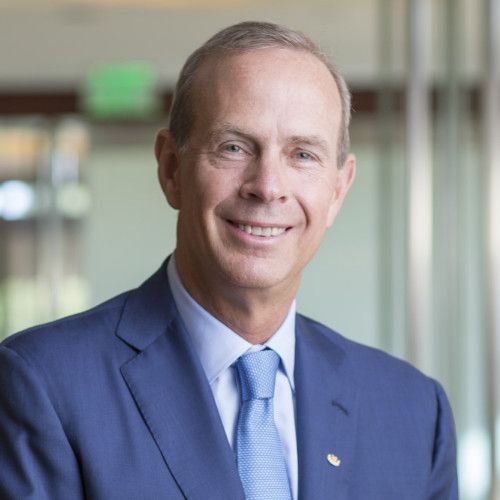
Michael Wirth
Chairman & CEO
Thanks, Jeanine. Amid geopolitical uncertainty and market volatility, Chevron delivered a strong second quarter, driven by our consistent strategy, capital discipline and strong execution. Global Upstream production grew more than 5% quarter-over-quarter, underpinned by exceptional reliability across key assets.
In the U.S., we achieved a new upstream production record of nearly 2.1 million barrels of oil equivalent per day and record refinery throughput of over 1 million barrels per day. At the same time, we maintained financial and capital discipline, achieving our structural cost reduction target 6 months early, with $3 billion of annual run rate savings since 2024. Hess synergy benefits have also been delivered also 6 months early.
We continue to capture strong capital efficiencies in U.S. shale and tight, and expect to spend 25% less CapEx per barrel of oil equivalent in 2026 compared to last year. And we strengthened our balance sheet. to underpin long-term investments to deliver reliable energy the world will need for decades to come. This month also marks the 1-year anniversary of the Hess acquisition.
We pulled value forward, capturing 50% more synergies than initially targeted, with $1.5 billion realized 6 months ahead of schedule. The Hess assets are generating strong free cash flow, which has been roughly double the incremental dividends and accretive to shareholders on a per share basis. This reflects the quality of the combined portfolio.
Guyana is a world-class asset with significant resource depth that is expected to extend high-margin oil growth into the 2030s. In the Bakken, we're leveraging best practices from our shale and tight business to drive performance improvement, drilling laterals that are on average 28% longer, optimizing workovers and applying advanced chemicals. And we're also maintaining similar production with 1 less rig.
Further, we're benefiting from the talented Hess employees who bring deep expertise in offshore, unconventional and exploration. The entire organization is stronger because of this combination. I'll now hand it over to Jeff, who will share an update on power.
Jeff Gustavson
VP, Low Carbon Energy
Thanks, Mike. The U.S. is undergoing a structural shift in electricity demand as AI accelerates, and reliable power is becoming the critical constraint. Chevron is well positioned to address this challenge.
We bring a combination of assets and capabilities we believe few can match. A leading U.S. natural gas portfolio, extensive experience with large-scale behind-the-meter power, proven project execution capabilities, and strong partnerships that provide access to critical equipment and leading customers. This reflects Chevron's strategy in action.
We're leveraging advantaged assets, customer relationships, execution capabilities and partnerships to deliver reliable, affordable energy while creating long-term shareholder value. While many data center power projects have been announced, few have secured long-term customer commitments for behind-the-meter power and only 1 is at multi-gigawatt scale, Project Kilby. This demonstrates our ability to execute at speed and scale.
We recently signed a 20-year take-or-pay power purchase agreement with Microsoft for 2.67 gigawatts of firm behind-the-meter capacity, supporting its co-located data center complex. We're now focused on execution, with permitting and EPC activities progressing towards a final investment decision later this year. Kilby is expected to deliver mid-teens returns and long-duration contracted cash flows that are independent of commodity price cycles.
Importantly, Kilby provides a repeatable model. We're already in advanced discussions on additional opportunities with existing and potential customers for future projects. We've engaged closely with local stakeholders throughout development and have been encouraged by the strong support we've received in West Texas.
I'll now turn it over to Eimear to discuss the financial results.
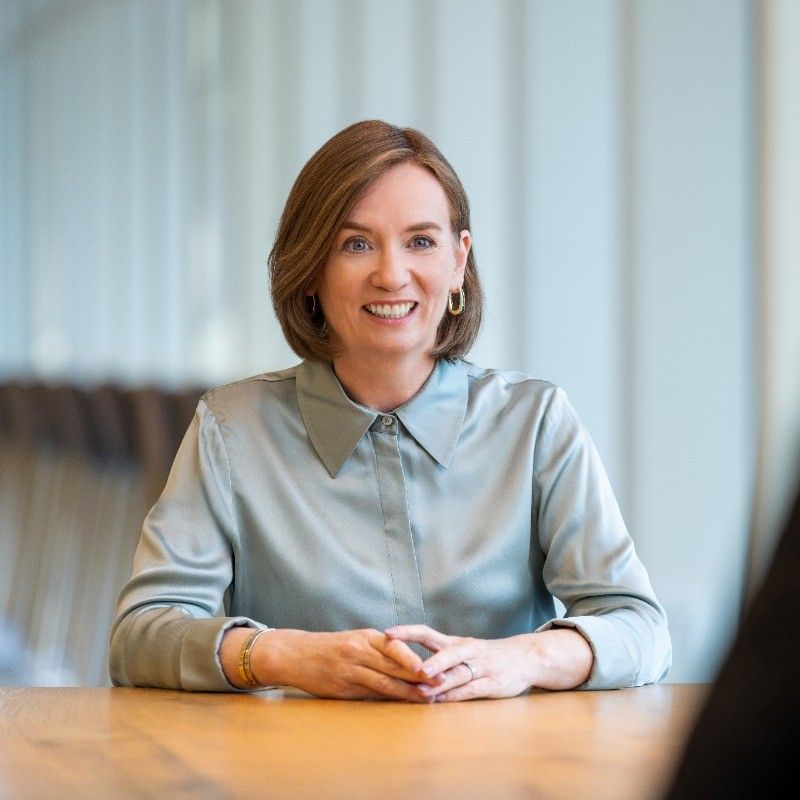
Thanks, Jeff. For the second quarter, Chevron reported earnings of $12.1 billion or $6.11 per share. Adjusted earnings were $12 billion or $6.06 per share.
Cash flow from operations, excluding working capital, was nearly $20 billion. Organic CapEx was $4.4 billion for the quarter. We now expect to finish the year at the lower end of our guidance range of $18 billion to $19 billion.
And our net debt coverage ratio improved, reflecting a strong cash generation in the quarter. Adjusted second quarter earnings were $9.2 billion higher versus last quarter. Adjusted upstream earnings increased due to higher realizations, higher liftings and favorable timing effects and were partly offset by higher DD&A and tax-related expenses.
Adjusted downstream earnings increased primarily due to higher refining margins and favorable timing effects. Chevron generated $19.7 billion of cash flow from operations, excluding working capital and $15.4 billion of adjusted free cash flow in the quarter. We reduced debt by more than $8 billion, further strengthening our balance sheet and financial flexibility.
Net debt to CFFO at the end of the second quarter was 0.6x. Following the large build in the first quarter, working capital unwound by $2.9 billion as commodity prices decreased through the quarter. On production, we had our second highest quarter ever, maintaining strong operating momentum across all our key assets and growing production by over 200,000 barrels of oil equivalent per day.
Reliable operations defined the quarter. In the U.S., we achieved records for total production, Permian production and throughput at multiple facilities in the Gulf of America. International production was also strong at nearly 2 million barrels of oil equivalent per day.
And TCO and Australia operated at or near full rates and the impact from the Middle East conflict remained isolated to the Partitioned Zone, representing about 1% of second quarter total production. Costs always matter, and they always will. We achieved $3 billion of structural cost reductions over the past 12 months, reaching our target 6 months ahead of schedule.
Thanks to the hard work and relentless focus across the organization, more than 70% of the savings came from efficiency gains, underscoring the quality of the improvements delivered. Through these reductions, we have largely offset inflationary effects while we continued to grow across key assets like the Permian, Gulf of America and Guyana. We're never satisfied and never done.
And we will continue to look for ways to lower costs to drive lasting value. Our plan is clear, execute safely and reliably, deliver on our objectives and continue to expand our opportunity set for the future. Our second quarter performance demonstrates strong execution and results that can be seen in our bottom line.
We remain confident in the 2030 objectives we outlined last November, including annual production growth of 2% to 3%, adjusted free cash flow growth averaging greater than 10% per year and more than 3% improvement on return on capital employed, all at flat commodity prices that are lower than today. We also continue to develop robust growth options for the next decade, building new resource options across regions and asset classes. Achieving the power milestone, stacking multiple exploration successes and securing strategic exploration agreements and MOUs in the Mediterranean, Africa and the Middle East are examples of the strong set of opportunities we have for the future.
We're focused on executing with excellence in the near term, meeting or exceeding our guidance through the end of the decade and creating even more value in the decades that follow. Consistent with our long-standing financial priorities, we intend to reward our shareholders today, tomorrow and long into the future. I'll now hand it over to Jeanine.
All right. Thank you, Eimear. This concludes our prepared remarks.
Additional guidance can be found in the appendix to this presentation as well as on the slides and other information posted on chevron.com. We're now ready to take your questions. Katie, please open the lines.
Our first question comes from Devin McDermott with Morgan Stanley.
So Mike, Eimear, the goals you laid out with the corporate reorganization plan last year was more than just cost. It was also to support best-in-class operations. And I think the strong results this quarter clearly show that's paying off.
So on the theme of operations, I wanted to start on TCO, which looks like it was one of the key drivers of higher production quarter-over-quarter. I was wondering if you could talk about performance there. Any learnings as far as it relates to quantifying or derisking the debottlenecking opportunity.
And while we're on the topic, Mike, maybe you can just address the current situation at the CPC pipeline and any levers that Chevron has to mitigate, any disruption there?
Michael Wirth
Chairman & CEO
Sure, Devin. Thanks for the comments about our reorganization. And you're right.
It wasn't just about efficiency. It was also about performance. I'll speak to TCO performance and the pipeline.
And Eimear, maybe you can cover the debottlenecking question. It was a strong quarter. You'll see in the production waterfall, we're up 170,000 barrels a day versus first quarter, really stellar operating performance in the second quarter.
Each month was among the highest months we've ever seen at TCO. The affiliate distributions in the quarter of roughly $3 billion, most of that is coming from TCO and I want to affirm our $6 billion guidance at $70 Brent, obviously, we're likely to have a higher number for Brent this year, which would translate into even higher affiliate distributions. The team has been working incredibly hard on recovering from some of the first quarter issues.
But really the most exciting thing is the ability to optimize across the entire field now. The low-pressure production performance of field has been strong and through this integrated control center to take each generation of topside facilities and look at the way to best optimize those, not only individually, but collectively across the capabilities we have in all of the kit. The pipeline question, you've seen the media reports, there has been some activity in the Black Sea, that we've seen primarily related to the Ukraine-Russia conflict, it has had over the last number of quarters intermittently some impact on activity in and around overseas.
I can tell you that, today, both of our SPMs are in service there. The third SPM has been down for a while, undergoing some refurbishment activities, will be open here in the third quarter. So all 3 will be available later in the third quarter.
But the pipeline is flowing the -- we've been loading ships this week. And mitigation is the usual things. We can ship some across the Caspian.
We can ship some on rail. We've got storage that we can use to buffer some of these ups and downs. But as you know, CPC is the primary route to market for that production for us and others on the pipeline.
We're clearly a big shipper on it, but not the only shipper. And we work with governments in the region, the U.S. government, Kazakh government, obviously, other governments to be sure that, that pipeline stays flowing. It's critical to the world at a time when we need the energy.
Eimear, maybe you can talk about -- specifically about the debottlenecking of FGP and the third-generation plant.
Sure. So Devin, the debottlenecking efforts, as Mike said, we're focused on the third-generation plant that we started up last year. And its original oil capacity is 260,000 barrels of oil per day.
So the teams are -- they conducted a turnaround in the fourth quarter of 2025. And during the turnaround, they changed out some of the internals in a major column in that system. It was a very low capital job or modification.
And since the fourth quarter last year, they have been testing the performance of that unit and its interaction with the rest of the utilities in the system in 3GP very extensively. So testing different operating conditions. And we are very comfortable to say today that we have successfully increased the nameplate oil capacity from 3GP or the third generation plant from the original 260,000 barrels of oil per day to 320 million oil -- 320,000 barrels of oil per day, sorry.
So -- and what that means for the overall total feed processing capacity, it now takes the total state processing capacity to slightly above 1 million barrels of oil per day. And so we're really encouraged by that. I'm confident that we can sustain that level of performance.
The efforts by the team are consistent with our track record of looking for the technical limits in plant and increasing the capacity. So they'll continue to focus on safely and reliably optimizing the plant and the production, optimizing through the integrated operations center from the reservoir through to the market. So we're really, really pleased with that.
We'll go next to Neil Mehta with Goldman Sachs.
Yes. Thanks, Mike and Eimear. I just want to spend some time on the shale and tight part of the portfolio.
And Mike, maybe you can give us how you're thinking about the different components there. The 25% less CapEx per barrel oil equivalent in '26 compared to last year is a good data point. It sounds like capital efficiency is moving in the right direction.
Spend a little bit of time in the Bakken as you evaluate whether this is core or noncore and then spend some time in Vaca Muerta. Maybe a quick tour around the world would be great on shale and tight.
Michael Wirth
Chairman & CEO
Okay. Well, let me give you a couple of comments, and then I have Eimear talk about capital efficiency in the Permian in particular. We're producing on the order of 1.7 million barrels a day out of our shale and tight portfolio.
One of the things I'm really pleased with in the new operating model is we brought all these assets together under common management. Previously, we had them reporting in geographically, and we attempted to coordinate across those assets, but it's not the same as having one organization responsible for operating all of them for applying technology to all of them to optimize activity across all the shale and tight portfolio. And as you know, we've got multiple large assets in there, 1 million barrels a day in the Permian, 400 in the DJ, 200 in the Bakken.
Argentina, smaller than that, but growing. And really, out of the largest piece, the U.S. piece, we've got assets that we're working at plateau to generate free cash flow, which is the lesson, I think, that the industry learned over the prior decade when it generated no free cash flow essentially and all the cash went back into growth. At the scale that we operate at now, we could grow these assets further, particularly in the Permian, if we chose but we are working for efficiency, productivity and to generate free cash out of them.
In the Bakken, we're getting to know the asset better. Actually, the person who runs all of our shale and tight came from Hess and is very familiar with the Bakken. And I cited some of the things that we're doing in the Bakken differently already in terms of lateral length and drilling efficiencies, same production with 1 fewer rig.
So we're getting to know that asset better as was the case with the DJ when we integrated it. It turns out that oftentimes the things you don't know, you can't underestimate. And we like what we see in the Bakken.
We've got to sort through this midstream thing that we get asked about on every one of these calls, and we'll let you know as we've got our thinking and plans together for that. But it's really been great to see the benefits across the entire portfolio that have -- we've been able to drive by bringing them under common management. One of those being continued capital efficiencies, just when you think there won't be much more and you might have climbed the improvement curve and started to level out, we continue to be surprised yet again that there is more there.
And I think some of that is a result of being able to really focus on the performance of these assets as opposed to be driven by growth. So Eimear, maybe you can talk a little bit more about the capital efficiency, particularly.
Yes. Thanks, Mike. So I mean, the Permian has been operating for the last 5 quarters at over 1 million barrels per day.
So they are seeing huge efficiencies with this focus on sweating the assets. So not growing production. Growing free cash flow.
Our capital is now, we expect it to be below $3.5 billion this year. So that's a 25% improvement in capital efficiency. So CapEx per barrel of oil over 2025.
It's one of the reasons why we feel confident today to say that we expect to finish the year at the low end of our capital budget range of $18 billion to $19 billion. Maybe a few examples. We have talked before about the drilling efficiencies and the completion efficiencies.
But Permian is also seeing the highest reliability it's seen since 2024. And so there's a lot of new initiatives, including optimizing artificial lift, real-time facility optimization, a new approach to ops and maintenance through an asset tiering lens. All of those things are delivering really stellar reliability at surface as well as all of the drilling efficiencies and collection efficiencies that we've talked to you about before.
So we're really encouraged by what we've achieved. And by bringing all of the shale and tight assets together to run them all as one, and we couldn't -- we really couldn't do it without bringing all these assets together because they're all learning from each other.
We'll take our next question from [ John Royall ] with Piper Sandler.
So my question is on the power business, and I appreciate the update and the detail on Kilby. My question is more about how you view the long term for Chevron in the power business. It sounds to me from Jeff's commentary that you're uniquely positioned to serve this market and you mentioned a potential future projects beyond Kilby.
Can you talk about how much power could contribute to your business mix longer term? And how should we think about how it fits into the next decade plus of Chevron's growth story?
Jeff Gustavson
VP, Low Carbon Energy
Yes. Sure, John. Thanks for the question.
We're very happy with the milestone that we achieved in June with Microsoft, high-quality customer, a 20-year firm PPA. It really serves more than just that project though. We do see a larger business potential here.
Kilby is a good proof point. It demonstrates that there's durable, very high customer demand. It demonstrates that the -- this model, this behind-the-meter power model works for customers.
And it also shows that we bring capabilities which are differentiated in this market. In my comments, I spoke about the structural shift in power demand. A demand far exceeds supply.
The grid cannot keep up with the demand from hyperscalers and others. And we see that persisting for years. Our capabilities are deep.
Our large natural gas portfolio, our experience in natural gas markets across the country are behind-the-meter power experience around the world in very remote areas where you don't have grid options. You must be behind the meter and you must do so at a very high reliability. Our complex project development and execution capabilities, these are very large-scale projects.
Our customer relationships, partner relationships and other stakeholders to put all of that together takes a long list of capabilities, and we bring those here. When we look to the future, turbine availability is tight. We have some deep relationships with GE Vernova and other manufacturers.
We're already talking to them about their cues. I think the Kilby announcement strengthens our position in these discussions, and demonstrates that we're not just talking about potential projects, but we've converted an opportunity into an executable project. So we'll pursue additional opportunities.
We already have some of those discussions well underway with existing and new customers and partners, but we'll also be disciplined as we move this forward. And we'll always focus on value over growth.
We'll take our next question from Doug Leggate with Wolfe Research.
Douglas George Blyth Leggate
Mike, I wonder if I could take a little bit of a longer term view. The U.S. has perhaps become -- it's back in everybody's focus as a safe source of energy supply. And you paused your growth trajectory in the Permian some years ago to inflect to free cash flow.
My question is, you've got a lot of things going on in the portfolio today. Guyana is inflecting to free cash flow. You've put a lot of stuff in the portfolio beyond your current plan.
Where does the Permian fit? Could we see that go back to growth in the post 2030 outlook?
Michael Wirth
Chairman & CEO
Yes, Doug, thank you. Listen, Actually, it was just last year that we took the Permian to plateau, not years ago. And if you look at it, it has continued to grow.
And we can -- I can have Jeanine to follow up with you off-line, but it actually has crept up and is still growing. But the point here is we really want to turn the organization to focusing on the efficiencies and productivity that Eimear talked about earlier, and we're seeing that in the Permian, we're seeing that in other assets as well. Could the Permian grow? 100%.
But we've learned the lessons that at some point, you want to see free cash out of these assets and we're seeing that in significant quantums. We're working hard on technologies that can change the equation. And we've talked in the past about advanced chemicals.
We can talk about it more. We've talked about AI, and there's a lot of interesting things going on with AI. We maybe haven't talked much about simulation technologies, but we're working on both incremental and potentially novel improvements to stimulation.
We're leaving 90% of the molecules in the ground, there's a huge incentive to figure out how to unlock all of that. And so as we work these technology levers and see performance improvements, it changes your options. You can extend the plateau and hold to plateau.
You can create more value in a plate. You can create more value in growth. We have thousands of well locations today as we use technology to unlock horizons or benches that may not be economic using today's technology, that inventory of drillable locations goes up.
And so this is an asset that is incredibly advantaged given our long history there, given our royalty position there. And we are going to work it to create value, not for a year or 2, not growth for a year or 2, but value long, long, long into the future. And I expect we will unlock options like those I've described over the coming years.
Let me just talk a little bit about growth because that's really what kind of your question gets at, and I get this from others. There's kind of 3 buckets that I think about our growth opportunities in. One are the things that are enhanced.
So our massive shale portfolio and the ability to further improve that. Guyana, which we've talked about. The Eastern Med, where we've got a project underway to expand Leviathan, we're moving towards FID on another project at Aphrodite.
Argentina, where we're continuing to see policy move in a good direction and there's enormous resource potential there. West Africa, we've got a lot of captured opportunity today that creates growth options, not just for the next few years, but well into the next decade. The second bucket are announced business development advancements in some of our exploration.
So new entries into Libya, Suriname, Namibia, our continued leadership position in terms of acreage in the Gulf of America, all the new exploration acreage that we've added over the last few years. And then the third bucket are what I'll describe as special situations that we have some control over. Venezuela is one of those.
We're in negotiations right now to try to improve the fiscal terms and enable more investment in Venezuela. A second one of those would be the Iraq situation where due to the circumstances Lukoil found itself in, it has stepped away from West Qurna 2. The Iraqi Prime Minister who was here recently, we've signed some agreements with them.
And there is significant potential at West Qurna 2, Nasiriyah and in Iraq. And then the TCO concession, which I didn't address in my response to Devin, but we're into our -- well into the negotiations on that. Obviously, massive resource potential there, a field we know well.
And so broadly speaking, we have a lot of growth options in hand. And we will pursue those that are the strongest. We will remain capital disciplined and the Permian is one of many options we've got out over into the next decade for growth.
We'll take our next question from Arun Jayaram with JPMorgan.
Mike, I wanted to get your perspective on Iraq. You look to be close to an entry to operate West Qurna 2 and Nasiriyah. I'd love to see how you think that this Iraqi opportunity could compete for capital in your portfolio, how you view overall commercial terms, cost of supply and how you think about managing some of the aboveground risk?
Michael Wirth
Chairman & CEO
Sure. So obviously, potentially huge resources, third-party data on West Qurna 2 alone is gross oil potential well into the billions of barrels. It's one of the largest oil fields in the world.
We're advancing discussions to align on the key commercial and economic principles for future contracts. It's a new form of contract. This month, we signed some follow-on agreements that significantly advanced the commercial discussions at both West Qurna 2 and Nasiriyah.
And so we see a very encouraging set of signs from the Iraqi government. The terms look like they will be competitive within our portfolio. We still have work to be done to nail down all of the details.
And then there's a cross-border pipeline concept that would allow alternative routes to market, north through Iraq and potentially either through Syria or Turkey or perhaps even both to get to the Mediterranean. We've got a framework established to evaluate that. We've talked to a number of interested parties that would participate in that.
We would have a share in it, but many others would also have a share in what we're talking about. All this needs to get to final agreements, but it's advancing at pace. The Prime Minister, in particular, has been personally engaged and very supportive.
We appreciate the leadership from him that's made this progress possible. And we look forward to continuing the discussions in the coming months as we reach any final determinations, of course, you'll hear about it when we do.
We will take our next question from Steve Richardson with Evercore.
This is probably a good one for Eimear, but I'd love to just dig in a little bit on the achievement of the $3 billion of cost savings of schedule and the 70% kind of from efficiency gains. I was wondering if you could maybe just give us a sense of where you're seeing outperformance versus the plan? What have been some of the surprises?
And what are maybe some of the chunkier elements of what you're seeing as you're attacking these costs and then your confidence level on kind of, as you mentioned, sticking these costs and not falling back into a kind of inflationary trap, if you will.
Yes. Thanks, Stephen. So yes, we're absolutely thrilled to be able to share today that we achieved the $3 billion of structural cost reduction ahead of schedule.
It's a testament to all the teams around the organization. They've been relentlessly focused on this, so achieved great results. 70% of the results are associated with efficiency gains. And maybe what I'd point to there is we went through a massive restructuring, rewiring of the organization last year.
So that is impacting the results by 35% of the 70% that I referenced. And then the balance is associated with a combination of technology achievements, improvement initiatives across the organization and other things. So maybe a couple of examples to demonstrate our confidence in the sustainability of these savings.
The first thing I would maybe point to in the new ways of working or rewiring. We've pulled a lot of our work in to centralize functions and we have a technical center that allows us to do things across the organization like centralized and standardized engineering work orders, for example. And so that is something new, and we're seeing results there.
Another good example would be the way that we are looking at maintenance reliability. We talked earlier about the shale and tight business. They're running as one all together, learning from each other, and they have predictive maintenance that they haven't place in all of the assets that is delivering results, much more proactive in detecting anomalies and ensuring minimum loss production.
And then maybe a final one that I would talk to is around one of the improvement initiatives that's inspired by benchmarking and rigorous benchmarking, and that is turnaround optimization and what the teams are doing to tighter control scope, prioritize sequence, learn from each other. Those are the examples. So I call out these examples because there are things that are now built into the business we're very confident that we'll continue just with this focus that we have.
Costs always matter. They always will. We're never satisfied, and we're never done.
And we have a very strong culture across the organization and paying attention to this always. So thanks for the question.
We will take our next question from Biraj Borkhataria with RBC.
I just wanted to follow up on CPC again. This is obviously a very significant pipeline that serves your asset, also a number of your peers. So I suspect there's a number of governments involved trying to solve this issue.
But could you just kind of clarify if CPC pipeline is closed for an extended period of time, how much of that 1 million barrels a day of liquids could be evacuated by the alternative routes? And then related to that, in the Middle East, there's a lot of discussion at the moment around building alternative evacuation to reduce the risk from the Strait. I'm just wondering if anything incremental is being discussed here.
I know the geography is obviously very challenging, but any thoughts on that would be helpful.
Michael Wirth
Chairman & CEO
Yes. Braj, clearly, with the CPC being the primary evacuation route, if it were to be shut down for an extended period of time, that will create issues for all the shippers on that line. And that's number of different projects in Kazakhstan, a little bit that comes in from Russia as well.
I mentioned our alternatives before. I don't think we've quantified those and I don't intend to. But you've seen creativity in the Strait of Hormuz over the years, we've had to use some creativity at times with CPC.
But I will say the commitment to keeping it open from all the parties that rely on and all the governments that rely on it is very, very high. And I have a great degree of confidence that, that commitment is real and that we'll see the CPC. I won't say never interrupted, but I don't think that the scenario that you pose is a highly likely scenario that they'd be intended and extended shut-in.
On your second question about the Strait, I'm not sure I've fully understood it. I mean, I think you're probably aware of the kinds of things that have been done, the shuttling through the Strait, the loading outside the Strait, the pipelines, there are a number of different workarounds that have helped continue to establish some degree of flow through the Strait, those are the short-term actions and then the kind of the medium-term actions I talked about. One of them with the pipeline that we're evaluating to move to the Mediterranean.
There are other ideas like that, that are being advanced by others.
We'll take our next question from James West with Melius Research.
Wanted to -- you're very eloquently shifted a question on the Permian earlier to really walking around world, demonstrating the optionality that you've put in place in various markets that are now turning into signed agreements and action. I wanted to dig in a little bit deeper, I wouldn't ask you to walk back around, but on exploration in particular, that I'm thinking, Libya, Namibia, Greece, where are you kind of most excited? Or do you think you have the best upside potential?
And where do you think maybe we as the market are kind of missing? What you're up to?
Michael Wirth
Chairman & CEO
Yes. Thanks, James. I'll start by saying that this is the largest and highest quality opportunity set that we've had in years, probably in my time in this role.
We haven't had this deep inventory of opportunity. We're building quality through choice. We increased our acreage by 35% and over the last year or so.
We've closed on 10 million net acres just this year in South America, in the Mediterranean and the Gulf of America primarily. We've got a strong presence in Guyana, which I won't spend any time on because I think that's pretty well understood, but there's still exploration potential there. West Africa, the deepwater of both Nigeria and Angola is relatively underexplored.
And we're actively working with that. I'm very optimistic that large basins like that, that have a proven petroleum system offer more opportunity for us. We've got another well.
We intend to put that in Namibia, where we've seen success. So West Africa is a place I'm very excited about. The Mediterranean is interesting.
We've got some success we've had off Egypt. We're a partner in a well that one of the operator has talked about on their call this week where there's been a working petroleum system that's been established, which is important in exploration to understand that. So there are opportunities there in the Eastern Med that we like.
The Middle East, again, I think, kind of speaks for itself. In Iraq, we've got both operating fields and associated exploration prospects that come with them that our exploration team, I would just say their eyes get wide open when you start to look at some of these structures and the analogs that are in the area around them. And so we're going to be disciplined in the way that we advance through that portfolio.
We're going to be using these new tools. And this is an area where AI will definitely change. Cycle time, it will change our ability to see things that previously we may not have been able to see, and I expect that it will change outcomes.
And the last thing I'll just say is we're already seeing some results. Over the last 5 years or so, we've had 5 different discoveries or successful appraisal wells in the Gulf of America, in the Partitioned Zone, in West Africa. And I mentioned the well of Egypt that we're a partner in recently.
And so we're already seeing the early signs of this portfolio yielding different outcomes. We'll be talking about this a lot more in the years to come.
We'll take our next question from Sam Margolin with Wells Fargo.
Maybe switching gears to natural gas, the gas market in Europe is exceptionally tight right now. Chevron in Australia typically has a volume ramp Gorgon and Wheatstone typically have a little bit of a volume uplift in the second half of years starting in the third quarter. Can you just talk about your available LNG position right now and optimization opportunities that are put to you to kind of solve this European shortage?
Michael Wirth
Chairman & CEO
Yes, Sam, we do see some seasonality in Australia. And so cooler weather is better for LNG facilities than hot weather. Most of our Australian LNG is termed up with customers in Asia.
We do have some spot cargoes that we move, but it's far and away the smaller portion of our production there. West Africa, we moved LNG up into Europe more steadily on some shorter-term contracts and a fair amount of spot out of West Africa. And then we've got a growing position here in North America, where we've got 4 million tons per annum that will come in over the next few years, and that is primarily going into Europe.
And so I would say Australia is probably the longest pot, if you will, it's the furthest away. We've got it pretty termed up. And Asian spot markets have been very strong as well.
And so you see JKM and TTF both are -- have been firming. And I think the demand in both North Asia and Europe is likely to continue to be pretty strong here over this next period of time. And so we'll do the -- we'll make the best sales into each market and continue to operate at a high reliability, which I'm really pleased to say our Australian assets are operating at.
We will take our next question from Manav Gupta with UBS.
A lot of questions on CPC. I was hoping I can talk a little bit about CPChem. A big jump in earnings.
Obviously, global product inventory, everybody talks about refined products is depleted, but so is the polyethylene side depleted. Multiple global crackers are also struggling, and you have a very unique portfolio, but most of it is in North America. So if you could talk about the leverage that CPChem has in this environment of elevated polyethylene margins.
Michael Wirth
Chairman & CEO
Yes. I mean, I think you've mostly answered the question yourself there. CPChem's primary footprint is in North America.
There's some production in the Middle East, which obviously is constrained right now given the circumstances with the Strait. But CPChem cracks ethane primarily and primarily in North America. Those margins have been under a lot of pressure over the last few years.
They've been buoyant to say the least, over the last few months as we've seen naphtha out of the Middle East constrained, which mostly flows into North Asia for naphtha crackers, which are normally the price setting mechanism out there in the marketplace. And ethane crackers are lower cost, the margins tend to be better and in an environment where you get production tightening up the way that it has, CPChem is advantaged in this kind of an environment. We'll see how long it lasts.
I can't predict when things in the Strait will settle down, and we'll start to see those flows again. But very pleased with the performance in CPChem right now.
We'll take our next question from Jean Ann Salisbury with Bank of America.
Can you discuss your decision to license your surfactant technology versus keeping it in-house? How did you view the pros and cons there? And how large could this revenue stream be?
Jean Ann, I'll take this one. Yes. No, we're really excited about this.
Look, the rationale was really just to explore another pathway for innovation. Advanced chcemicals is such a focus for us with regards to improving recoveries, as Mike talked earlier, for our entire shale and tight asset class. And we have a lot of work underway deploying pilots, trying different chemicals and an opportunity to work with a partner that has manufacturing capability, distribution capability and pumping service, quite frankly, allows us to co-innovate with them and accelerate scaling this technology with speed.
So I mean, that's overall the rationale. We have a lot of NOJV volumes. And therefore, having a partner like ZL allows us to benefit from those volumes, offer this to our NOJV partners, and it's a win win-win.
And overall, we see it as a way to accelerate our progress on doubling shale and tight recovery across the shale and tight basin. So that's the rationale.
Michael Wirth
Chairman & CEO
And Jean Ann, you asked about the materiality. The contribution from recoveries will be much larger, I think, than the licensing revenue. We'll get licensing revenue from it, but in a company our size.
The real opportunity is on the application of the chemicals.
We'll take our next question from Betty Jiang with Barclays.
Probably a question for Eimear on the long-term CapEx. You mentioned earlier that Permian is falling below 3.5 and a lot of that is in driven by capital efficiencies, which I would imagine will also put downward pressure on that Permian CapEx going forward. But at the same time, you have power that's folding in as well.
So could you just remind us what's driving the range for that long-term CapEx and whether we could be seeing that number trending lower as well?
Yes. In terms of the long-term range that we shared last year at our Investor Day, so we provide a range of $18 billion to $21 billion. Obviously, this year, our budget is $18 billion to $19 billion.
But that range represents the opportunities that we have over the course of the next 5 years. Within that, we had expected to have a power project within that capital range. And so the one that Jeff talked about, product Kilby, is reflected in both the organic capital outlook and range and the affiliate capital outlook and range.
And so at the end of the day, we're going to be capital disciplined. Mike talked about all the growth options that we're stacking up around the world, both power and on the upstream side. And so we'll continue to be disciplined, but we believe that, that range gives us enough for the options that we have on the table today.
We will take our next question from Nitin Kumar with Mizuho Securities.
I want to shift gears a little bit. Obviously, refining had a good quarter given the macro environment. Mike, I was wondering if you guys would be willing to talk about what do you see as the outlook post the war?
Are you seeing any evidence of demand destruction as things remain tight. What's your view on the cracks here?
Michael Wirth
Chairman & CEO
Yes. So I'll be brief here because I want to give everybody a chance on the call. Middle distillates are really the tight spot right now.
Initially, it looked like jet, now diesel. European diesel demand was weaker in the second quarter, which I think is what really kept global inventories from drawing further than they did. That may not hold up as we get into the third quarter.
You've got restocking of heating oil ahead of winter that is kind of upon us or soon to be upon us. That lands on top of the export ban from Russia, refinery outages in Russia, the obvious constraints that exist in the Strait. And then mogas inventories are low as well.
And so products are tighter than crude around the world. And that's why cracks have widened out. I think the question is, when does -- when do we get crude flows reestablished?
And when do those cracks come back in? Hard to say. So I think we're going to see some upward pressure on product pricing here into the third quarter and perhaps beyond that.
Demand destruction is not obvious to me at any significant scale. China is a black box. And so that's the big question is what's really going on in China?
It's difficult to shift demand as rapidly as their crude purchases have come off. I think they've got some flexibility to do so. Other Asian markets that have seen actual physical constraints, there's likely some demand destruction in some of those markets, at least in the short term.
But in terms of longer-term structural demand destruction, I would say it's hard to find evidence of that at this point.
We will take our next question from [ Bob Brackett ] with Bernstein.
If I think about Project Kilby, you've talked about expected mid-teens returns, and that's really a ring fence around the take-or-pay and standing up that power gen. Are there additional opportunities to create value given that you're sitting there in county with plenty of acres and plenty of wells. Is that additional add-on value potentially?
Jeff Gustavson
VP, Low Carbon Energy
Yes. Thanks, Bob. There could be.
There could be expansion potential on the Kilby site after the first phase after we ramp up to this 2.67 gigawatts. None of that has been agreed or negotiated yet with Microsoft. But obviously, their demand needs continue to increase, and we'll work with them to see if we can supply those while meeting our return thresholds.
I talked about the potential to scale this business further. We don't see Kilby as a one-off. This is a very durable macro demand environment.
Really, the depth of our capabilities are unique and differentiated here. Microsoft certainly saw that with Kilby, and there are others who are interested in where can we grow beyond this, both in West Texas and perhaps other parts of the U.S. But look, as we go forward, we're always going to be disciplined with this. We were very disciplined on Kilby.
We had a firm requirement for what we needed to do for our shareholders, both returns and value. We're going to hold to those going forward, and we'll provide additional information as new growth opportunities emerge.
We'll take our next question from Jason Gabelman with TD Cowen.
I wanted to ask on Venezuela. I imagine you're getting to the point where the amount that they owe you is going to be fully repaid. And I wonder if that point do your contractual terms shift to the new fiscal framework that they're developing?
Or is there something in place right now that you would lift under? And then more broadly, how are the contract negotiations going to unlock additional volumes there? And how do you think about both incremental investments and incremental production growth over the medium term?
Okay, Jason, I'll maybe try and hit this one. On debt recovery, we are continuing to recover our debt. We expect that by early 2027, that will be fully recovered.
In terms of our JVs, today, we are operating 3 JVs very successfully. We've grown production over the last few years from 40,000 to 250,000. With the existing model that we have in place, we have grown the production from those 3 JVs, 15% over the last 6 months to 280,000 barrels of oil per day, and we're anticipating that we will be able to grow up to 50% between now and the end of 2028.
So everything with Venezuela operationally is going well and consistent with what we had communicated. With regards to the opportunities, obviously, we've been in Venezuela for 100 years. We stayed there because of the potential in the country and the assets.
We love the assets, heavy oil that's there. We have a lot of experience in this space. So we are actively working with the government to look at other opportunities.
We'll be disciplined. At the end of the day, the terms that we're discussing are confidential, but they have to be competitive, and they have to compete in our portfolio for capital. But I want to leave you with, we're very encouraged with where we are with Venezuela on the additional opportunities.
Our final question comes from Phillip Jungwirth with BMO.
Can you update us on your latest thoughts just around future investment across Argentina in the Vaca Muerta, Eimear? I think you were down there in May, and we saw some reports around over $10 billion development. It's always been a large contributor to other shale and tight.
So just hoping you could update us on the potential here and what gives you the confidence now to push forward.
Yes. Thanks, Phillip. Well, we are really excited about the opportunity in Argentina.
And we've obviously got history there, 3 development areas that we are an operator in or in a nonoperated position. We are producing 80,000 barrels a day from Argentina, 70% -- 75% oil cuts. So we like the products from Vaca Muerta.
And we're leveraging the lessons from the shale and tight asset business that now includes Bakken and DJ and Permian to really look at how to deliver on the growth that we shared in our Investor Day, which is 3x -- to grow at 3x by 2035. I think the engagement that you might be referring to was with the Minister of Economy, and we had a discussion around the rig framework that has recently been extended to oil and gas. And so we have applied for the El Trapial, an application for that asset.
And this framework gives us 30 years of fiscal stability, incentives like accelerated depreciation and tax incentives. And so that makes Argentina look much more competitive from a growth option for us. So again, we'll continue to be disciplined, no change in the near term, but obviously, a lot of opportunity to grow.
Okay. I think that's the last question we have. We'd like to thank everyone for your time today.
We appreciate your interest in Chevron and your participation in today's call. Please stay safe and healthy. Katie, back to you.
Thank you. This concludes Chevron's Second Quarter 2026 Earnings Conference Call. You may now disconnect.








 Submit Feedback




 US
US






















 IE
IE






 IN
IN















 AU
AU





































































 JP
JP




































 BM
BM












































































 CA
CA